

Children who enjoy failure will change the future? "Ahha-Ohho," the new standard in education where brain science meets creative education. 2026-09-07
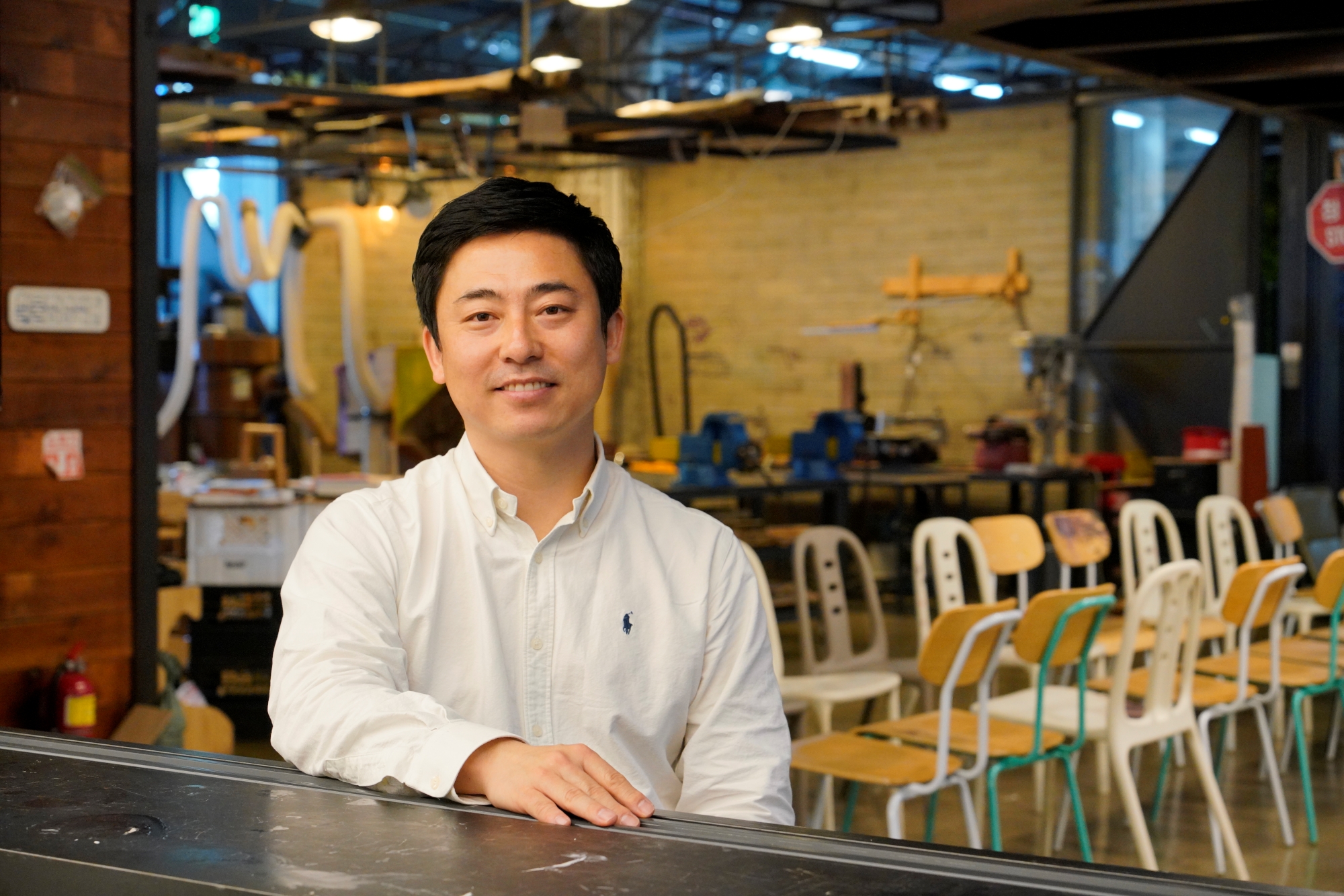
Interview with Professor Shin Jong-ho of Seoul National University's Department of Education, who conducted the effectiveness verification study on "Ahha-Ohho"
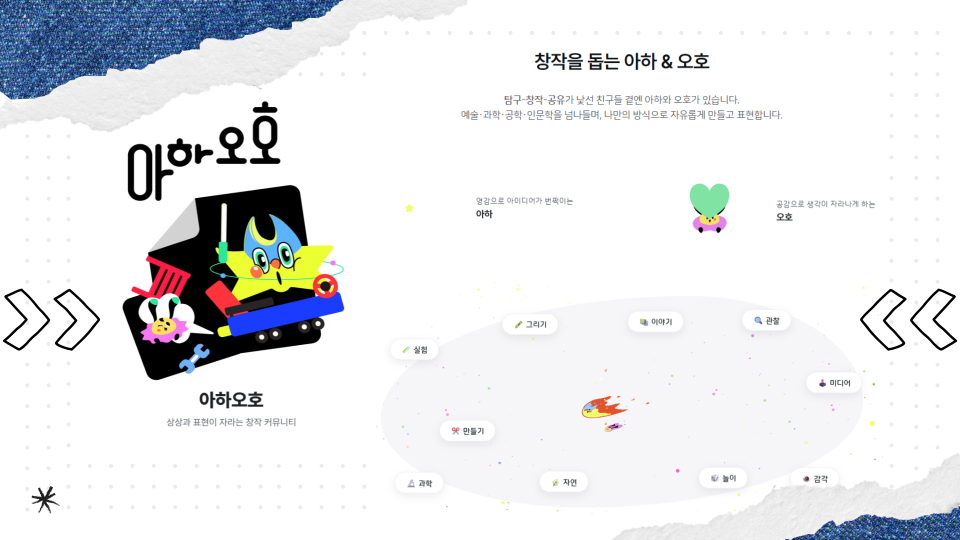
Smilegate Future Lab Foundation, marking its 10th anniversary this year, officially launched the children's creative learning community app "Ahha-Ohho" this past June. Ahha-Ohho is the result of expanding into the digital world the philosophy of creative environments that Future Lab has built over the past decade in offline spaces. It presents itself as an experience-centered learning platform where children start from their own interests, create things themselves, fail, and expand their learning.
"Ahha-Ohho" is equipped with an archiving feature that records children's creative activities, AI-based personalized feedback, and a reflection-and-reward system for looking back on the creative process. Its distinguishing feature is that it is designed to let children express their own thoughts and share them with friends to continue learning, rather than passively consuming finished content.
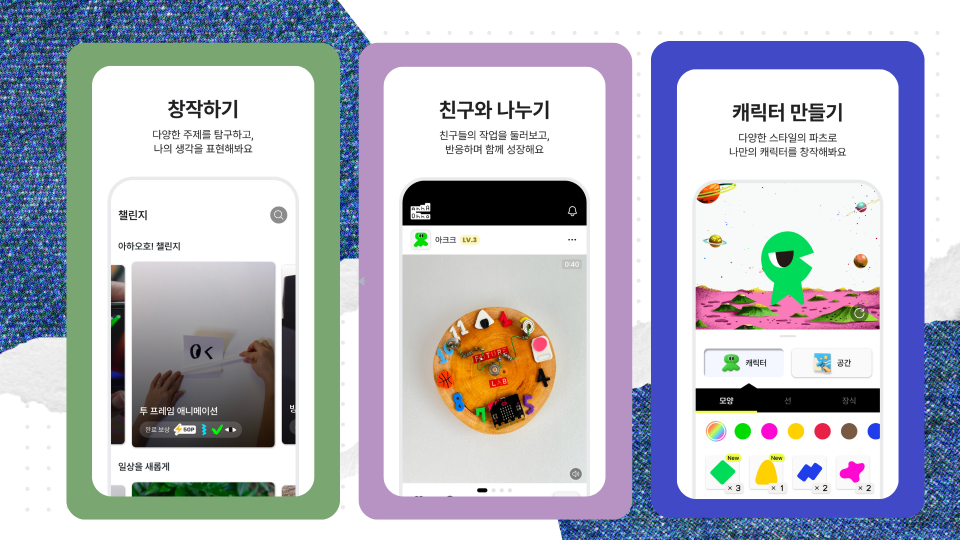
"Ahha-Ohho" implements a "Creative Loop" model — moving through "explore–create–share–feedback–reflect–try again" — built on the theoretical foundation of the "Creative Learning Spiral" developed by Mitchel Resnick, MIT Media Lab professor and Future Lab's vice chairman.
*Creative Learning Spiral: A theory that starts from the premise that the way kindergartners learn through play — imagining, creating, playing, sharing, reflecting, and then imagining again — is the most effective model for creative learning at any age.
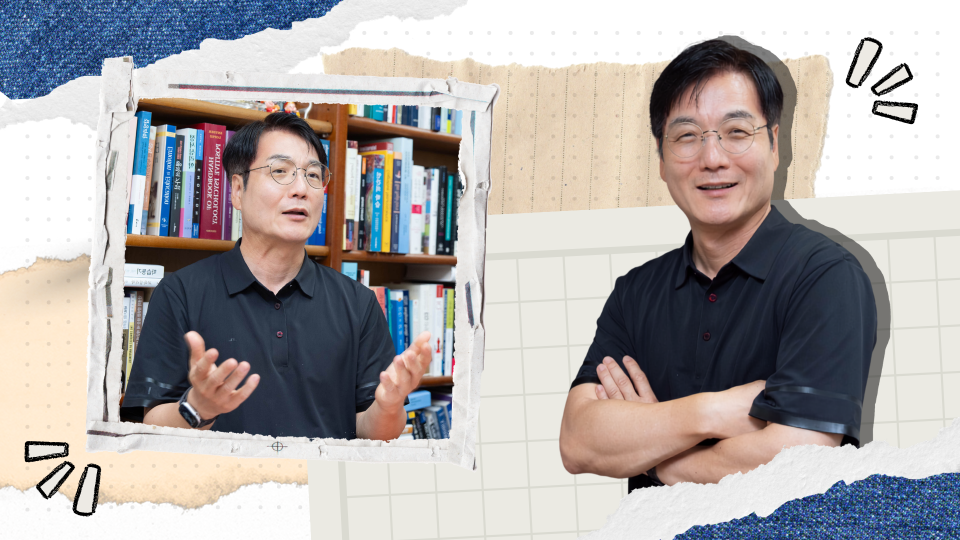
Alongside the launch of Ahha-Ohho, Future Lab partnered with a research team led by Professor Shin Jong-ho of Seoul National University to conduct a joint study verifying what actual effects the platform has on children's creative learning. Professor Shin is an educational psychologist specializing in learning motivation and cognitive development, and through this study he tracked, using both data and field observation, the changes in children who used Ahha-Ohho across several educational institutions. We met with Professor Shin to hear how the two moments Ahha-Ohho aims for — "Ahha" (realization) and "Ohho" (empathy) — actually showed up in the field.
Q1. I'm curious about the background that led you to join this study, and your first impressions of "Ahha-Ohho."
Conventional educational environments tend to focus on passive activities that follow a fixed "correct answer" or "instruction manual." This limits students' ability to develop the cognitive flexibility needed to explore various alternatives in situations that have no single right answer.
In the age of artificial intelligence, the ability to define and break through complex problems on one's own — that is, "creative problem-solving ability" — matters more than ever, beyond mere knowledge acquisition. As Professor Mitchel Resnick has emphasized, true creativity is not about having a clever idea; it is the ability to discover problems and implement solutions through repeated tinkering. That's why I had long believed that we urgently need an educational environment that embraces risk-taking and trial and error.
When I first encountered "Ahha-Ohho," what impressed me deeply was that this platform isn't just a simple creation tool — it systematically supports a whole iteration process in which children revise and develop their work based on trial and error and feedback. It was a structure that naturally drew out children's passion to drive their own learning through interest and a sense of accomplishment, rather than through external rewards or evaluation. I judged it to be an alternative educational platform that could help children internalize a creative self-efficacy — the belief that "I can come up with new ideas and solve problems" — and that's what led me to join this effectiveness verification study.
*Iteration: A concept referring to the creative process of continuously developing a work through failure and feedback.
Q2. What do you see as the most distinctive feature that sets Ahha-Ohho apart?
Its biggest distinguishing feature is that it's designed around "process" rather than "outcome." While typical educational apps focus on getting a fixed correct answer or mastering a function, "Ahha-Ohho" systematically supports an iteration process in which the child continuously revises and develops their work based on trial and error and feedback. Through "problem-solving iteration," where children dismantle an existing approach and try again when an issue arises, and "idea-expansion iteration," where they incorporate others' feedback to add new features, children take the lead in shaping their own work. On top of this, metacognitive ability also develops in the process of reflecting on "what" and "how" they did something, and "why" they did it, and sharing that with others.
Another notable point is that there are no extrinsic rewards at all, such as scores or rankings. Children experience intrinsic motivation — "passion" — that drives their learning through their own interest and sense of accomplishment rather than through external evaluation. Even in the face of the errors or failures that inevitably arise in the creative process, they don't easily give up; instead they experience an "emotional shift" that converts this into a strong sense of accomplishment. Professor Mitchel Resnick defined this process of staying immersed and enjoying even failure and frustration like play as "hard fun," and I see Ahha-Ohho as providing an optimal environment for cultivating this kind of academic resilience.
Q3. What were the core metrics set for this "effectiveness verification" study?
The core focus of this study was to demonstrate how the "creative activity process" within Ahha-Ohho connects to children's cognitive and emotional growth. To that end, we set four core metrics spanning both process and outcome.
First, creative problem solving. We defined creativity as the ability to discover problems and implement solutions through repeated revision, and used "problem-solving iteration" and "idea-expansion iteration" as the core metrics.
Second, learning persistence and resilience. We measured "hard fun" — the attitude of enjoying failure like play and not giving up — and observed the "emotional shift" process by which negative emotions (frustration) convert into positive emotions (a sense of accomplishment).
Third, metacognition. We aimed to confirm the growth of the ability to "pause and reflect" — objectifying one's own thought process — and focused our evaluation on "procedural reflection" and "meaning-making reflection."
Fourth, intrinsic learning motivation and curiosity. We placed importance on measuring the positive feedback loop in which children, even after tasting a sense of accomplishment, don't stop the activity but continue on with the curiosity of "how can I make this more fun?"
Q4. Were there meaningful changes confirmed in the actual data and case studies?
The most encouraging finding is that students' four core competencies (creative problem solving, learning persistence, metacognition, and intrinsic motivation) rose consistently across all five institutions, despite differences in grade level and operating format. The overall average of student self-report results rose from 3.74 pre-test to 4.11 post-test, and 80% of participating students showed positive change.
The item that showed the most dramatic rise in particular was the "reflection" questions in the metacognition domain. Scores rose significantly on items such as "I think about what I would fix the next time I make something" and "I think about what I did well and what I found disappointing," which shows that Aha-Oho's creative loop process directly contributed to improving children's self-directed cognitive regulation ability.
Individual cases were also striking. One student who had initially hesitated to try new things came, as the sessions repeated, to boldly revise and retry without fear of failure. Another student, who had ranked low on the pre-test, experienced an "emotional shift" — not giving up in the face of errors but converting them into positive emotion — and their scores rose afterward.
Q5. How did you actually measure "Ahha" and "Ohho" moments in the field?
Educators observed students' specific behaviors and utterances, measuring them in detail using three core process indicators: iteration, reflection, and emotional shift.
"Ahha" moments are metacognitive situations in which a child gains insight by objectifying their own thought process. We focused on observing "procedural reflection," in which children specifically mention the difference between the previous version and the current one during a retry, and we also measured "idea-expansion iteration" behavior, in which children add new elements even after achieving their basic goal, saying things like "what if I tried changing it this way?"
"Ohho" moments are situations in which children accept failure and error as part of play. We looked at whether, when a creation didn't work as intended, children boldly dismantled the existing structure or code and rebuilt it in a new way, and we tracked how often they voiced a positive problem-solving will, saying things like "why isn't this working?" or "let's try again."
Q6. What kinds of changes can we expect in children who experience "Ahha-Ohho"?
Children who experience play-based learning on the Ahha-Ohho platform can develop the cognitive flexibility to explore various alternatives in situations that have no single correct answer. Play-based learning triggers the motivation to drive one's own learning through interest and a sense of accomplishment — that is, "passion" — and generates sustained curiosity.
Children who are immersed in play through intrinsic motivation show an attitude of enjoying, like play, even the failure and frustration that inevitably arise in creative learning, and of not giving up. Because they participate out of their own enjoyment, they show task persistence, not easily giving up in the face of difficult tasks, and I believe this attitude can ultimately lead to a positive mindset that accepts failure as part of the learning process, as well as to the higher-order ability of creative problem solving.
Q7. Why do digital-native children need a platform like "Ahha-Ohho"?
The digital-native generation is exposed to digital devices from birth and encounters vast amounts of information, but tends to remain largely at the level of passive content consumption. As we move fully into the age of artificial intelligence, the cognitive flexibility to explore various alternatives in situations that have no single correct answer becomes essential.
"Aha-Oho" plays the role of converting children's passive content consumption into "active creation of experience." In this environment, children freely express their own thoughts through activities that have no fixed correct answer or instruction manual, and they show initiative by continuing to add and develop new elements even after achieving their basic goal, rather than stopping there. This problem-solving process ultimately leads to creative self-efficacy and confidence — the belief that "I can come up with new ideas and solve problems."
Schools and homes alike need to redesign their educational environments so that children move beyond the mere experience of acquiring knowledge. Continuously providing opportunities to combine different materials and ideas into something entirely new, and building an environment that makes children want to keep creating things through their own thinking — this will be the most useful way to cultivate the capabilities of the next generation.
Q8. What positive impact do you expect Ahha-Ohho to have on Korea's education ecosystem going forward?
What I most hope for is that it sends a message to our education ecosystem, for students in their growing years, that "true learning is not memorizing a fixed correct answer, but the 'process of growth' itself — planning and working things out on one's own to produce a result, and then turning that into a better result."
Going forward, the ability to reflect — objectifying the creative process and continually asking and answering "what, how, and why I did it" — will become even more important. Through this kind of reflection, children go through iteration, revising and developing their work, and come to hold a growth mindset: "even if I fail, I can just change my approach and try again."
I hope that this experience — which stimulates intrinsic learning motivation, immersing and exploring on one's own without external praise or scores — spreads into Korea's public education and home education through the "process-centered creative learning model" that Ahha-Ohho has demonstrated. I hope it leads to a positive shift in the education ecosystem, one in which children regain a sense of agency and get to enjoy the pleasure of learning itself.
Q9. Finally, could you offer some encouragement or suggestions for Future Lab's path ahead?
At a time when our education is still accustomed to the safe path of following a fixed "correct answer" and an "instruction manual," someone has to move first to create an environment that encourages children to take risks and try new things, even at the cost of failure. I believe Smilegate Future Lab is leading the way in building a stage where children can explore various alternatives in situations that have no correct answer. As an education scholar, I offer my deep support and encouragement for Future Lab's path, and for the pioneering spirit driving the change it brings about.
I am confident that this small change, which began at a single foothold called "Ahha-Ohho," will gradually expand across our entire education ecosystem. As this study's results show, children have already shown a strong will to continue, saying they "want to keep doing activities like Ahha-Ohho going forward — ones with no correct answer, where I make things by thinking for myself." I sincerely hope that this self-driven passion and curiosity planted within children will spread into homes and public education, and become the catalyst that fundamentally innovates Korea's education paradigm.
However, when quoting content in articles, please credit it as “Smilegate Newsroom.”



 TOP
TOP
