


Games That Embrace Repetition 2026-09-30
Labor was originally a punishment. In Genesis, God pronounces judgment on the human who ate the forbidden fruit: "By the sweat of your brow you will eat your food." Labor was the price of being driven out of paradise.
Sisyphus in Greek mythology fares even worse. For deceiving the gods, he must push a boulder up to the top of a mountain for all eternity. The moment it reaches the summit, it rolls back down. There is no end to it. Yet in the face of this absurd punishment, Albert Camus reached an unexpected conclusion: "One must imagine Sisyphus happy."
In other words, labor is something we ought to think of as capable of being happy. So if we want to get rid of work-induced ailments like the Monday blues, all we have to do is work on Sundays too and be happy about it. And work inside a game is something you can do on a Sunday. What's more, it makes you happy.
The windows get dirty again, and the monsters swarm back wave after wave, yet we never tire. We take on that repetition of our own accord, even paying money to do so.
The September issue gathers games that volunteer for repetition: those who wash windows, those who build cities in the sky, those who draw magic circles, those who stand against viruses. These are stories about how labor becomes entertainment. What you clean shows up in your bank balance, and what you build remains as data.
SKY THE SCRAPER
Let's start with the labor of cleaning. A window is like Sisyphus's boulder. Even if you finish wiping it all today, it will be dirty again tomorrow. Even when your wife makes you clean them every weekend, they look the same by the following week.
Sky, the protagonist of Sky the Scraper, is a cleaner who hangs from the exterior walls of skyscrapers and washes windows every day. The catch is that window cleaning isn't the only thing this person has to take care of.
The game layers a young-adult life simulation on top of high-rise exterior-cleaning action. You have to cover fixed expenses such as taxes, monthly rent, living costs, and medical bills, while also managing your mental state and stamina. True to the story of a young person chasing an unstable dream, the windows get cleaned well enough, but life itself refuses to come clean.
You approach it thinking it's a game about washing walls, and it turns into a game about managing your life. Since players can act freely, you can skip work if you don't feel like going in. The only catch is that the price is a negative balance. And I don't mean a bank overdraft loan, I mean actual negative. Just thinking about it is terrifying. Even Sisyphus probably didn't have it this rough.
It was released with a Korean localization on Stove. The game can be enjoyed in Korean only on Stove.

Cloud Dwellers
The philosopher Hannah Arendt distinguished between labor and work. Labor is consumed and vanishes, while work leaves a mark on the world. When you cook a meal, that meal disappears the moment it is eaten. That is labor. When you build a house, it remains and is passed down through generations. That is real estate. No, I mean work.
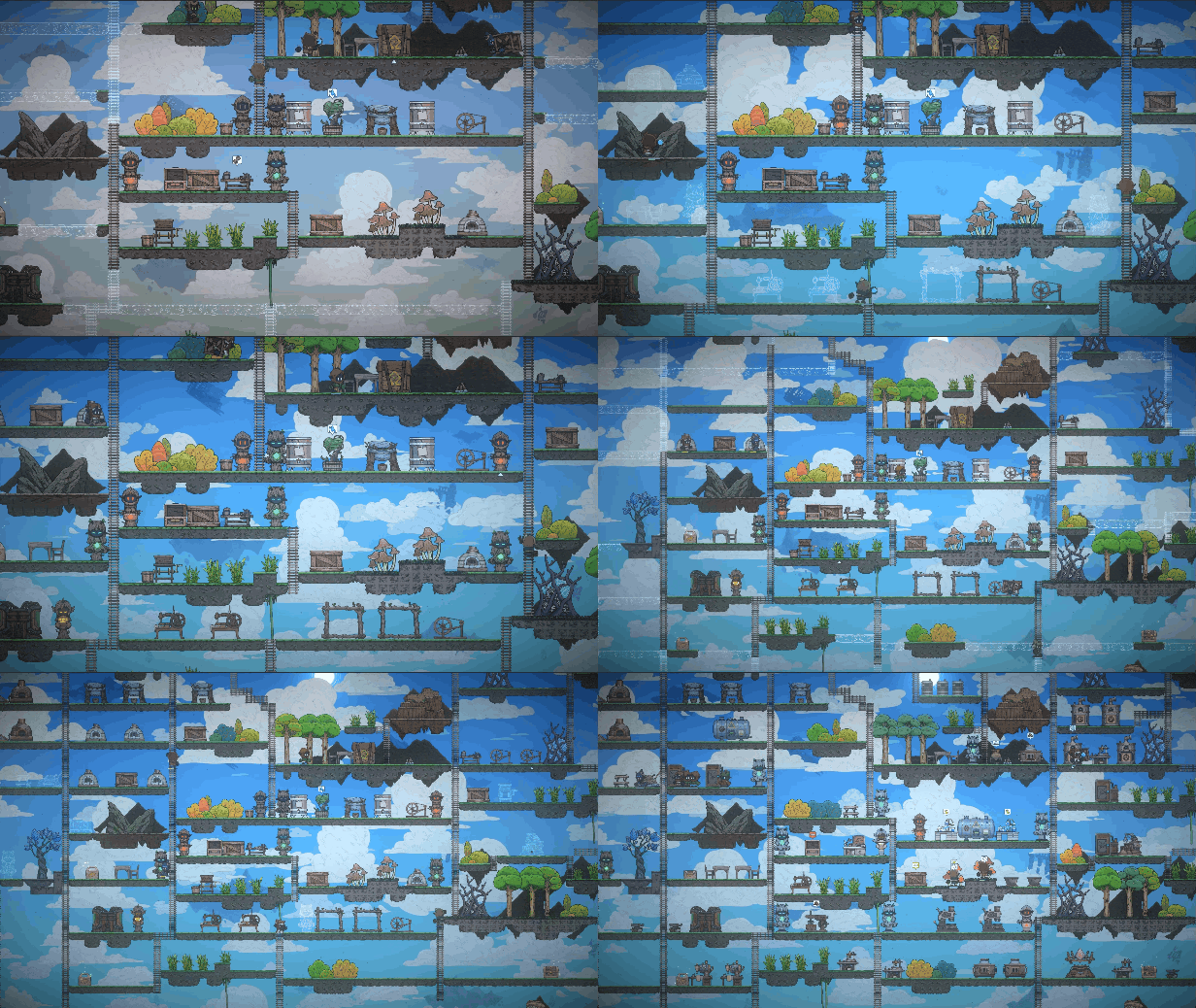
What Cloud Dwellers does is the latter. It is a construction simulation about building a city in a world made up of floating islands. You mine resources, put up buildings, and expand your settlement. The tower you built today will still be standing there tomorrow. It will even be there the day after, and the day after that.
This game has no pressure. Your village won't suddenly be wiped out. No one starves, and no one freezes to death. You can simply sit up in the sky and quietly build houses. The only stress comes from your own sense of aesthetics. Realizing that you have no talent for decorating is about the worst crisis this game can throw at you.
Even so, the 2D graphics and a feel as if a single page of a comic book had been lifted straight out of its pages put this game in the ranks of healing games. It also gives you the satisfaction of thinking, "I finished something today, too."
The Magus Circle
Ask most people to draw something with a mouse, and their drawing skills revert to elementary school art class level. They can't draw a single decent circle, and every straight line comes out wobbly. The Magus Circle gives even those people a chance.
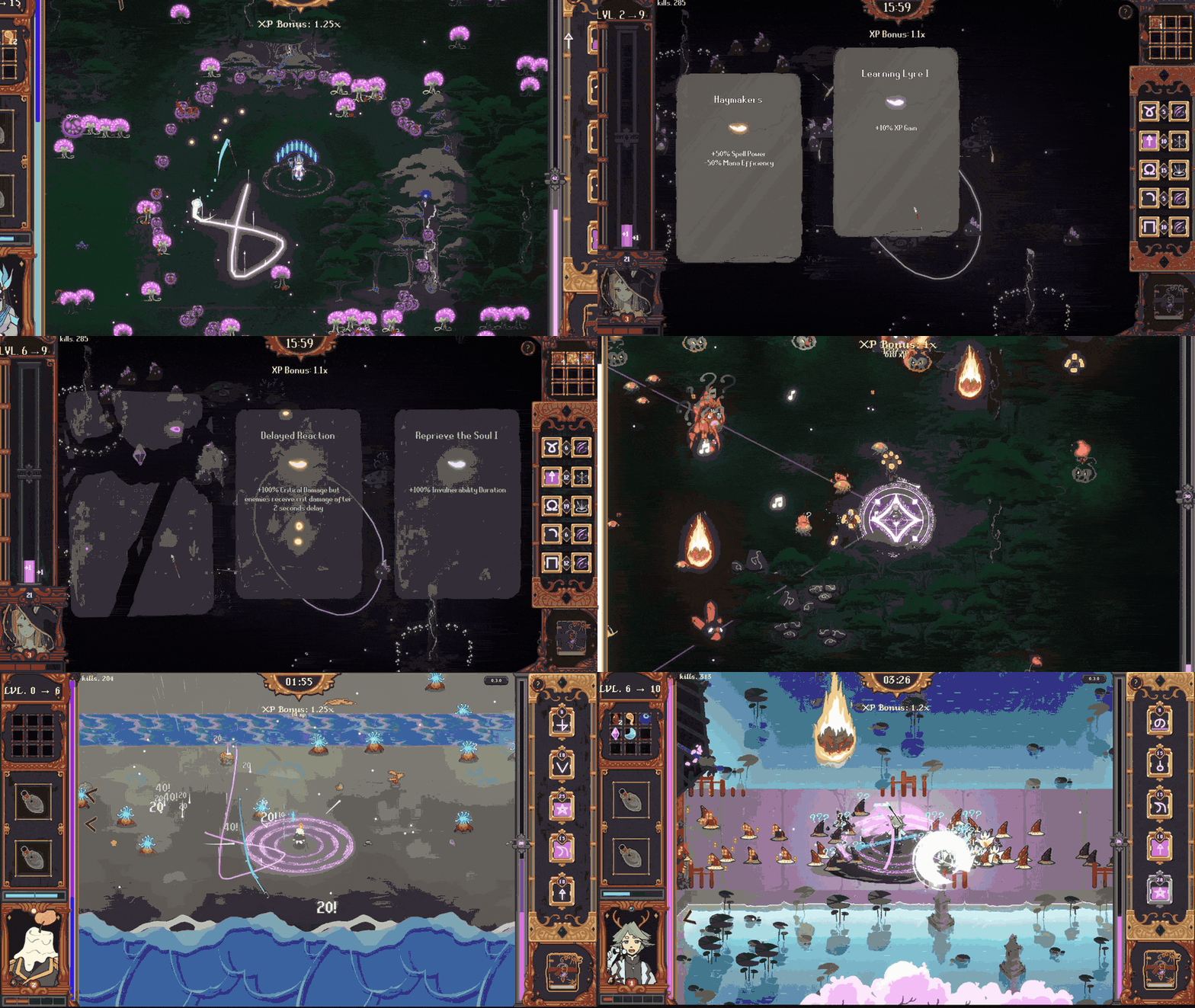
It is a drawing roguelike where you draw magic circles with your mouse to cast spells. Each drawing is both repetitive labor and, at the same time, a form of mastery.
Fortunately, this game has no such thing as an art grade. Even if you draw sloppily, the magic still goes off. What you need to become a great mage is not drawing skill but timing, angles, and a certain amount of nerve.
Each character has a different story, and a challenge system lets you choose your own difficulty, so you can adjust the intensity of the fun yourself. With more than 250 upgrade combinations, a different build strategy emerges every time you draw a magic circle. As you keep drawing, you realize what people mean when they say your hands know before you do.
You can play it earliest on Stove, ahead of any other platform.
Anti-Virus Girl
The antivirus program protecting my computer has never once been a pretty girl. Most of them were a colorful shield icon, or a program that suddenly kicked off a real-time scan and quietly ate up resources, no, gorged on them. The moment I tried to open a banking site, it felt less like antivirus software and more like malware.
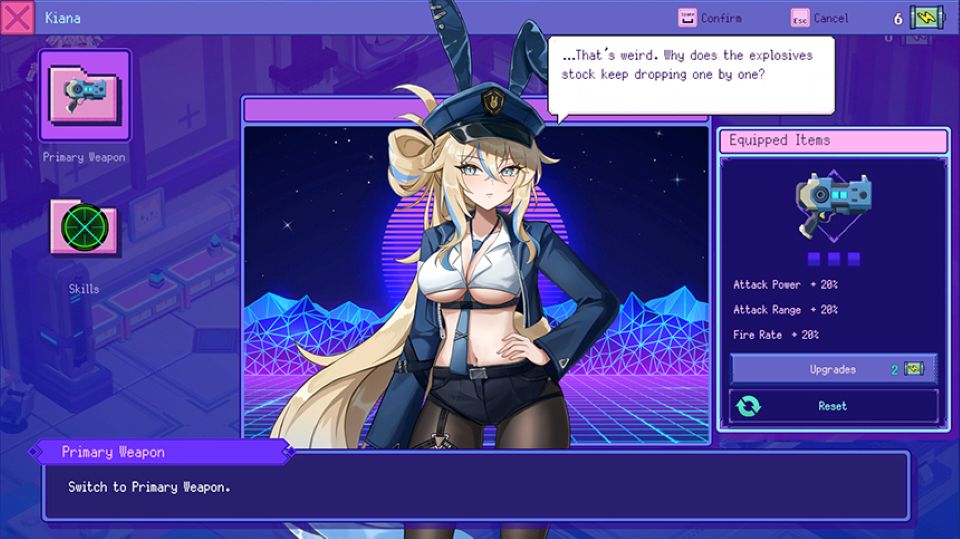
Anti-Virus Girl overturns this gruff relationship entirely. The premise is that the antivirus appears in the form of a pretty girl and protects your computer. Now even a real-time scan alert is a little less annoying. Even people who never cared about 2D girls will admit it: yes, this is how it all starts.
By turning familiar subjects like computer viruses, deletion, and malware into characters, the game also feels instantly approachable. The first impression is exactly that of a cute girl game, so everyone fires it up with a light heart, but before long their expressions turn serious. In reality, it is a tower defense game that is harder and more strategic than you'd expect. The hands arranging your defensive line are ruthless while the screen is adorable. You get hooked by the cuteness and then tripped up by the difficulty.
If a pretty girl popped up every time you turned on your computer to catch viruses for you, even the scan alerts from a real antivirus program would probably be welcome. As Camus put it, we can be happy even in the face of this repetition, can't we?
However, when quoting content in articles, please credit it as “Smilegate Newsroom.”



 TOP
TOP
