

"So That No Disability Ever Stops You from Playing" 2026-03-30
Gaming is a world where anyone can equally become the protagonist. The thrill of traversing vast continents and overcoming powerful enemies is unlike any other experience.
However, for visually impaired players, without in-game information delivered through voice or sound cues, they may not even be able to start the game.
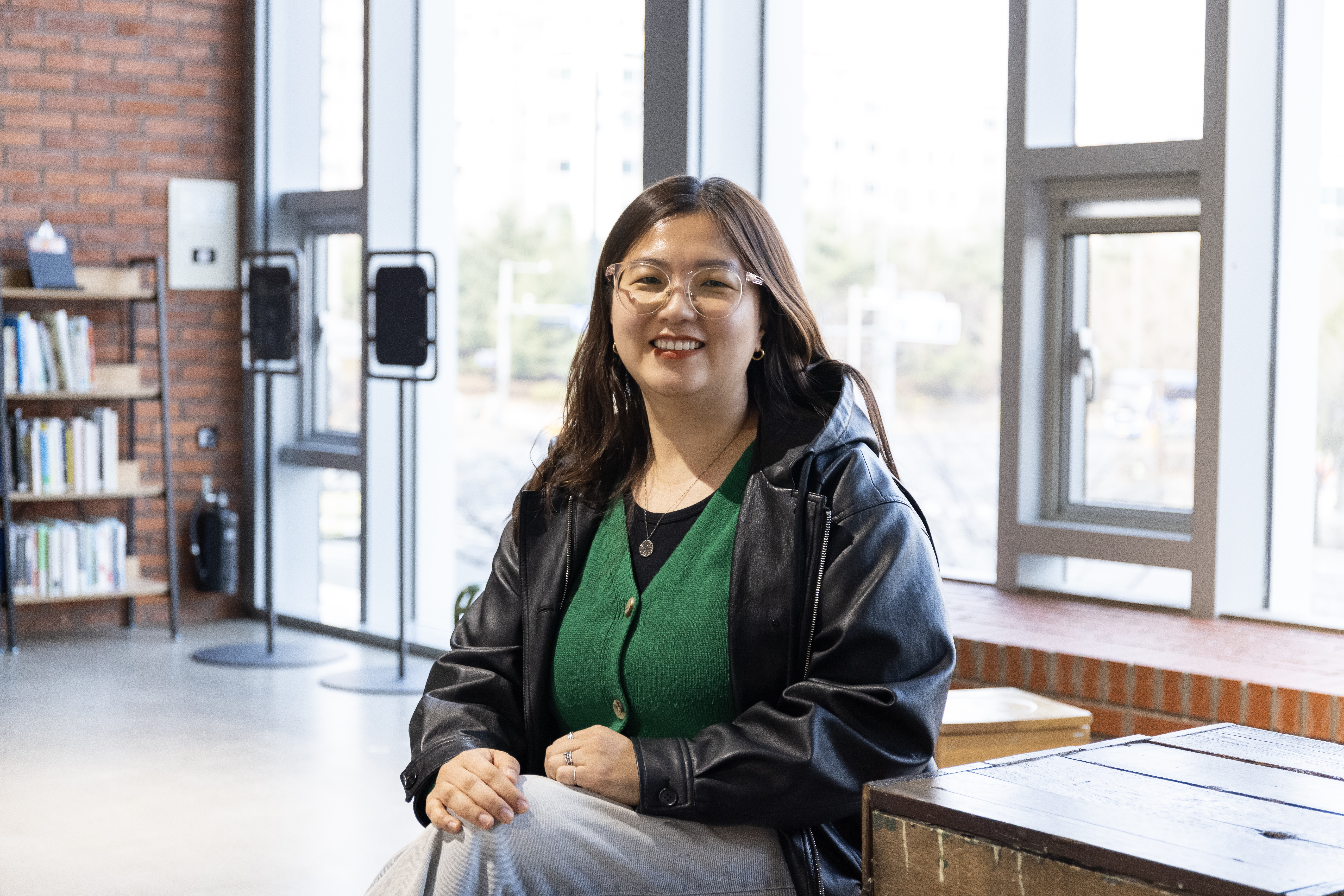
Advocating for "Games for Everyone," the Smilegate Accessibility Team is exploring various approaches to create an environment where everyone can participate. The team hires people with disabilities as professional testers and utilizes a wide range of assistive technologies. We met with Hannah Choi, the team leader at the forefront of improving game accessibility, to ask about the future landscape of gaming.
Meeting a Player Still in 20-Year-Old MUD Game
The inception of the Accessibility Team coincided with Smilegate’s 20th anniversary as the company prepared for its future. To be loved by more users in the global market, the company realized it needed to look beyond just developing "fun" games; it needed to create an environment where anyone could enjoy them regardless of physical conditions. The Accessibility Team was born from this vision.

The journey began with a fundamental question: "Is there a demand for game accessibility in Korea?" Choi recalls a conversation with a visually impaired player during market research as a defining moment.
"I wish you could make a game that someone who cannot see can also play."
At the time, the player was still playing text-based MUD (Multi-User Dungeon) games released over 20 years ago. Despite rapid technological advancements and the rise of new platforms, accessible games for visually impaired players remained limited and outdated. Choi realized that improving accessibility was not simply a matter of goodwill, but a vital gateway for some to access the world of gaming—a value that must be upheld.
Cultivating "Game Accessibility Testers": Professionals Missing from the Market
Overseas, there is already a structured ecosystem where accessibility experts and NGOs collaborate with companies. Major global players like Microsoft, EA, and Blizzard have been making multifaceted efforts to improve accessibility for years. In Korea, where such infrastructure was lacking, Smilegate had to find its own way to address the issue.
“The first step of our research was the ‘Panel Program,’ where we directly collected the gameplay experiences of users with disabilities,” Choi explained. “We operated it as a one-day part-time job where users visited Smilegate to play the games they usually enjoy while our team members observed and interviewed them.” This allowed the team to identify the practical difficulties faced by users with different types of disabilities.
However, there were limits. While panels could identify what was uncomfortable, they often struggled to provide professional analysis or technical alternatives. Furthermore, a one-time visit made it difficult to gather information and track improvements consistently.

To overcome this, Choi decided she needed testers with disabilities who could provide continuous, professional insights. “Feedback that only those with disabilities can provide is a core asset that enhances game quality and helps secure a broader user base,” she stated. This led to the creation of the "Game Accessibility Tester" role.
Today, these testers are growing into talents who sublimate the uniqueness of their disability into professional expertise. Based on the data built by the panel program and these professional testers, the team established independent checklists and guides tailored to the Korean gaming environment. These efforts were recognized by the Korea Employment Agency for Persons with Disabilities as an "Outstanding Case of New Job Development."
Challenging Global Standards: Catching the World's Eye
The efforts of the Accessibility Team are being integrated into actual titles. Through rigorous testing during the final build stages before launch, accessibility features and UI improvements have been reflected in new games like Chaos Zero Nightmare.
The team’s know-how is also being shared across the industry. Most notably, they participated as an official research institution (MOU) in the creation of the "Game Accessibility Guidelines" by the Korea Creative Content Agency (KOCCA), helping lay the foundation for accessibility in the domestic industry.
These achievements have also proven their value on the world stage. The team’s work was selected as a "Highlight Session" at GDC 2025, the world’s largest game developers conference. This recognition highlights their role in leading the discourse on game accessibility in Asia and producing research results that meet global standards despite being a latecomer.
"Speaking Up is a User's Right; Listening is a Developer's Responsibility"
Concluding the interview, Choi expressed her hopes for the future. “I hope Smilegate’s accessibility testers gain recognition and eventually move to other game companies, spreading the seeds of accessibility throughout the industry. Rather than just one specific game receiving praise for being ‘accessible,’ I want to see an inclusive ecosystem where disability is never a barrier, regardless of which game a player chooses.”

"Accessibility is your right. Please demand more and make your voices heard. Issues aren't resolved unless they are raised."
To fellow developers, she said, “If you need help, our door is always open.” Her goal is to share Smilegate’s accumulated knowledge without reservation so that the overall level of accessibility in the gaming market—not just one game—can rise.
A leisure activity that is a given for some is a challenge for others. To bridge that gap, the Smilegate Accessibility Team continues to listen. A world where all players can smile and play together—the first steps toward that future are already quietly underway.
However, when quoting content in articles, please credit it as “Smilegate Newsroom.”




 TOP
TOP
