

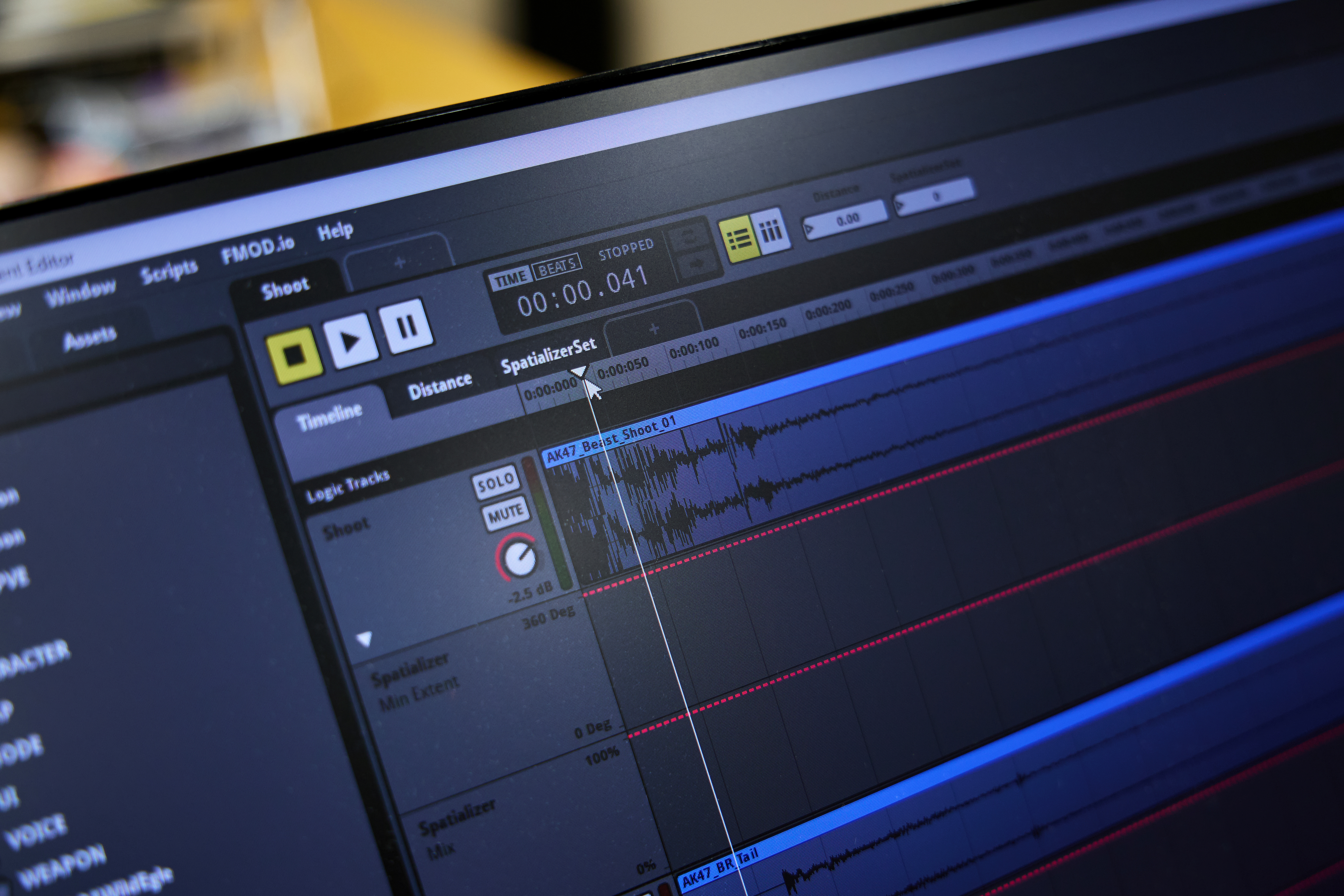
“The Power to Move Players” – A Look Inside the World of Game Audio 2026-01-21
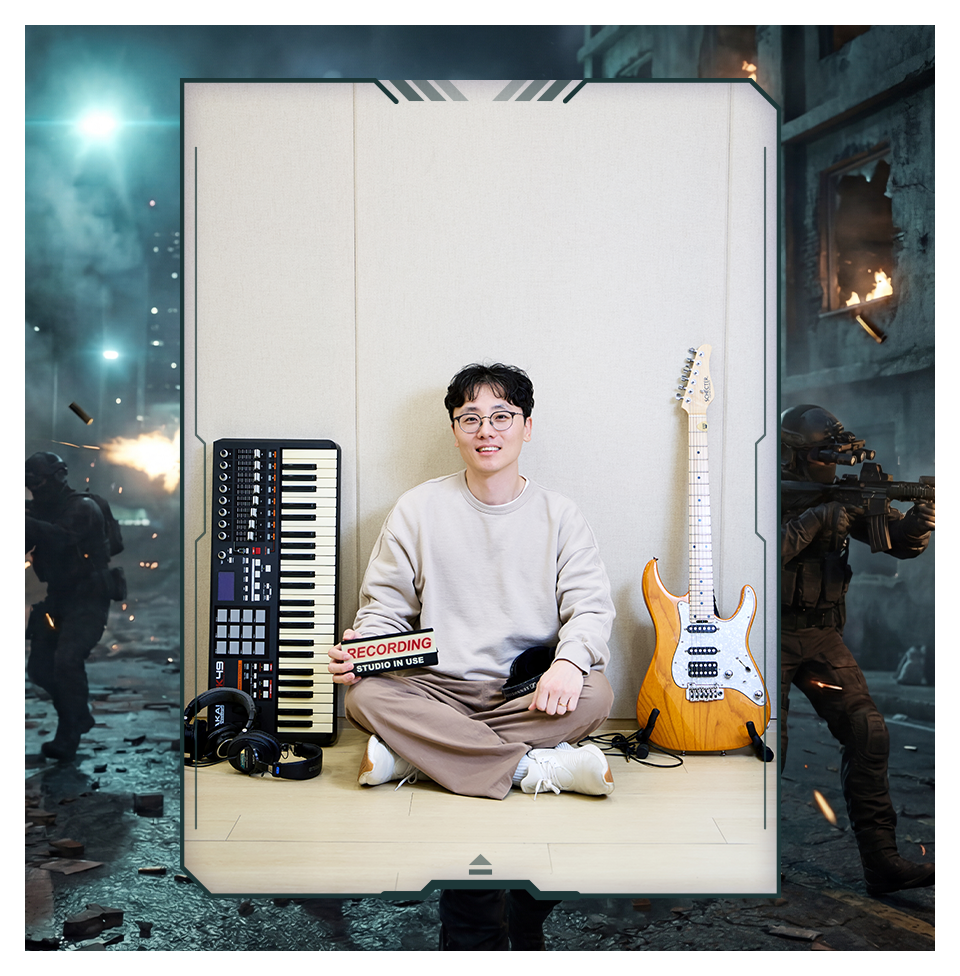
Jae-young Jung, Sound Director and Leader of the ‘CROSSFIRE’ Sound Team
While playing a game, you may experience scenes that send a chill down your spine despite the bright sunlight, or moments that touch your heart even on a rainy night in ruins. It is an invisible force that shapes the atmosphere, sets the pace, and moves players: sound.
Jae-young Jung, who joined Smilegate in 2016 and has been responsible for the sound of CROSSFIRE ever since, explains that great game sound is about “subtly but unmistakably enhancing the player experience.”
It is a job that requires hours of focused work with headphones on. Yet, within that silence, he creates new sounds to evoke joy, anger, sorrow, and pleasure in players. The Smilegate Newsroom team met with Team Leader Jae-young Jung, the man who leads the CF Sound Team and brings its “invisible language” to life.
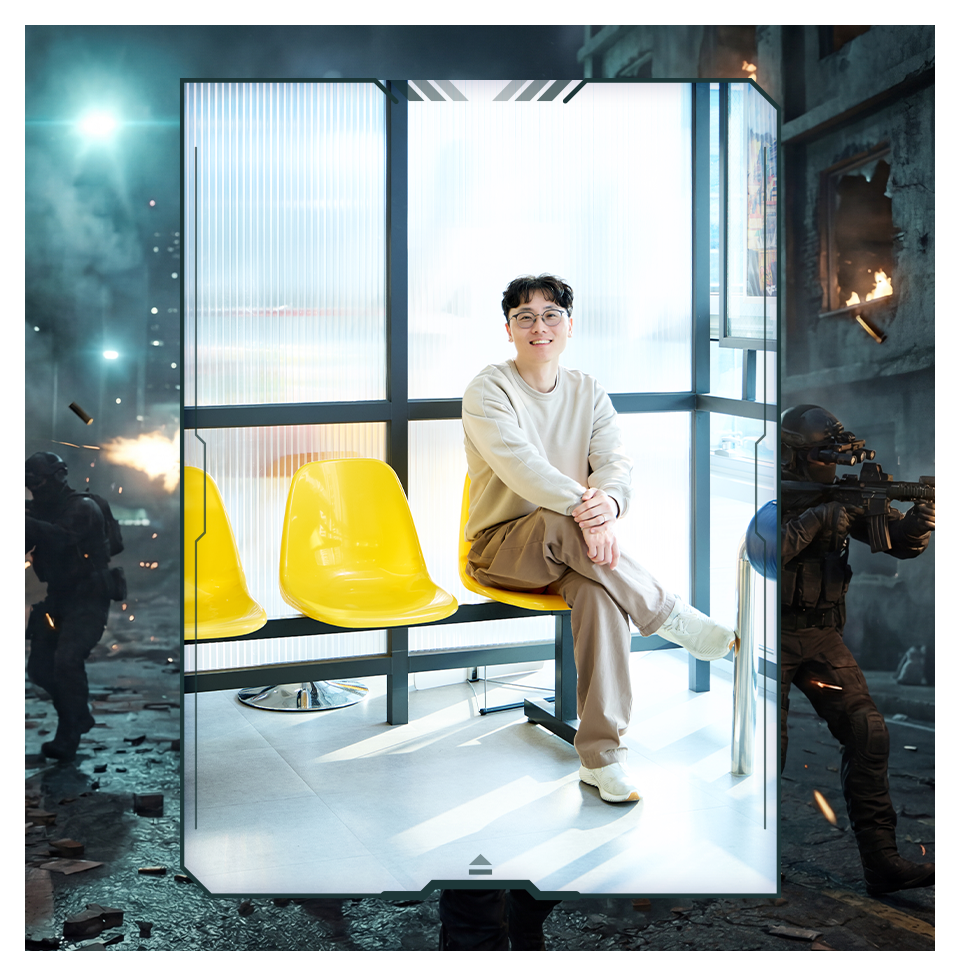
Q. Please introduce yourself.
Hello, I am Jae-young Jung, the leader of the Sound Team at CF Studio. Since joining Smilegate in 2016, I have worked as the Sound Director for CROSSFIRE, leading the overall sound production process.
Q. Could you introduce the work of the Sound Team?
We handle all aspects of audio for CROSSFIRE. This includes creating background music, sound effects for items, and character voice lines, as well as designing and developing the game’s audio systems.
Q. What is the actual production process like? How does game sound come to life?
The most important thing is that every member involved shares the same direction regarding the game's genre and theme. To ensure this, we discuss the sound direction and concept with the directors from the planning stage.
Then, we move into actual production. The methods vary depending on the nature of the sound—whether it’s UI sounds, BGM, SFX, or voices. For example, weapon sound effects must account for materials, animations, and visual effects, so we analyze the graphic resources once they are finished before starting production. For character voices, we plan the style and cast voice actors only after the character’s personality and appearance are finalized.
For BGM, we set the genre and BPM based on the story and emotional flow before composing. In the case of seasonal theme songs, we sometimes pre-produce them based solely on keywords and general direction.
"From the background music to the reverb of an explosion, the echo of footsteps, and the texture of a firearm—every small sound requires meticulous design. It involves a vast amount of technical consideration and planning."
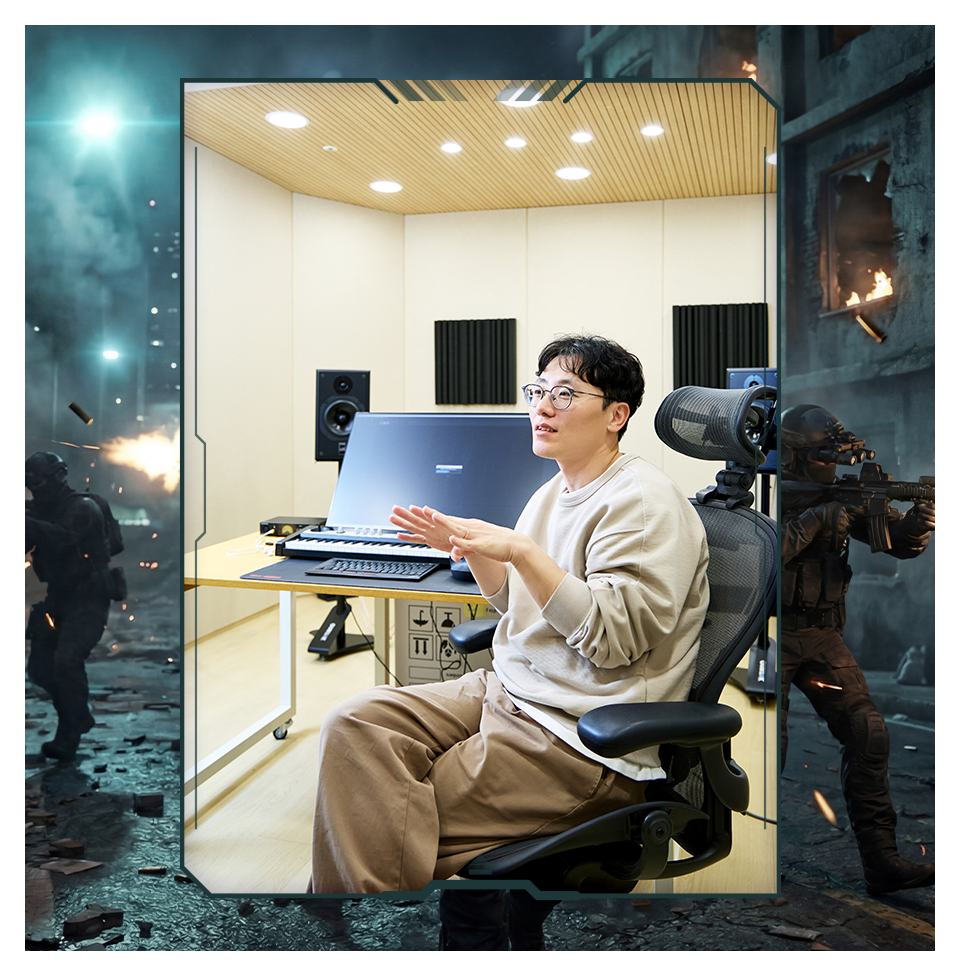
Q. When you first took on the CROSSFIRE project, what did you prioritize most?
One of the most important aspects of game audio is having a clear direction, a strong concept, and a well-structured system. When I joined, CROSSFIRE had already been running for over 10 years. There was a vast archive of sound assets created by various external partners.
So, I began with organization. I reviewed each sound element one by one and built a structured system around them. It took time, but we now have a clear direction and a stable framework in place.
Q. What would you consider your most representative achievement during your 10 years at Smilegate?
I’d say the biggest achievement was the introduction of a Game Audio Engine. It wasn’t easy, but since sound plays a critical role in FPS games, I saw it as a long-term investment. It took five years to fully implement and stabilize the system. As a result, the scope of our sound direction has expanded significantly, and we can now develop sound-based items.
The second achievement was the development of sound-based items. We received very positive feedback after introducing items that change character voices or firearm sounds.
The third was the BGM player feature. We produce theme music for each season and allow users to select and play their preferred tracks directly from the main screen.
“The development of sound-based items and the BGM player feature was only possible because we had built the foundation with the Game Audio Engine.”
Q. Do you remember any specific user reactions?
When a test version of our BGM is released, it often gets uploaded to platforms like Chinese YouTube channels. I felt truly proud when I saw a comment saying, "This isn't a game company; it's a music company."
Q. Are there any hardships or interesting episodes unique to the Sound Team?
Sound work often takes place at the very last stage of development, so schedules are always tight. Sometimes we have to start working based only on planning documents, without finalized art assets, in order to meet the deadline. It can be quite challenging when the final assets end up diverging from the original direction.
Also, because we’re almost always wearing headphones, we sometimes don’t notice when people call our names. More than once, a colleague has had to tap me on the shoulder to get my attention. (Laughs)
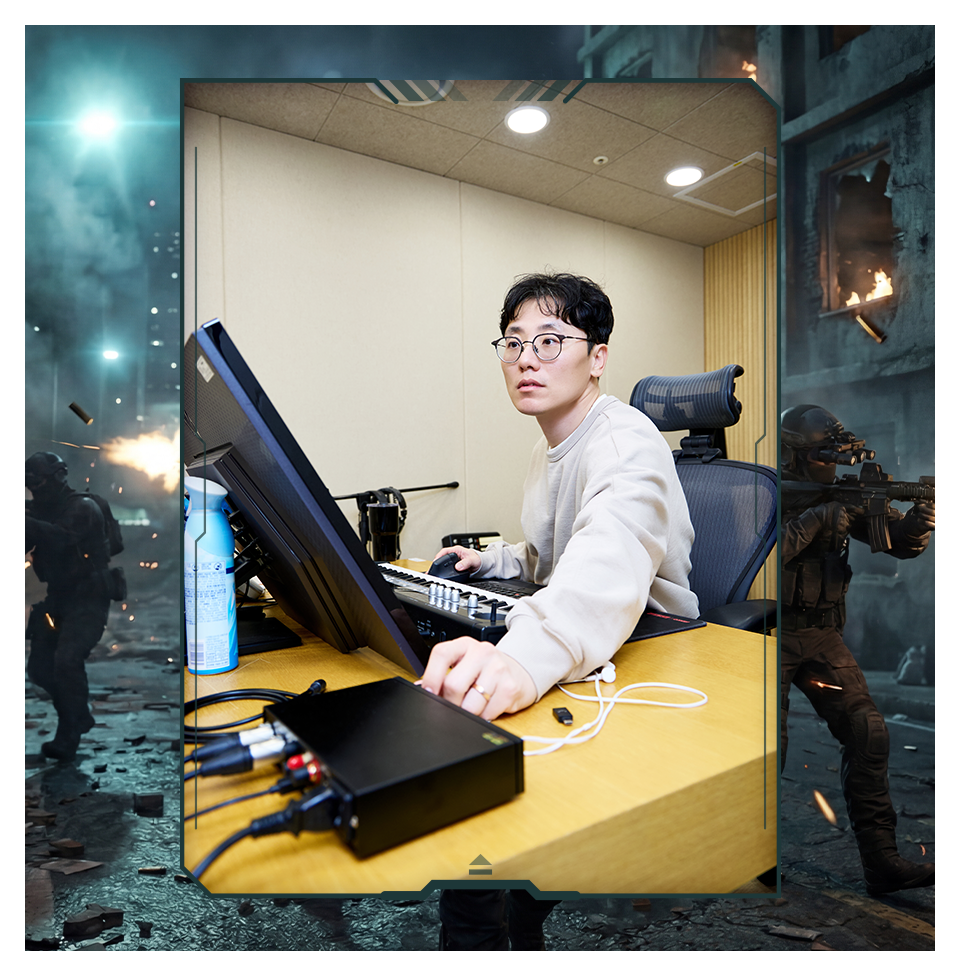
Q. What led you to become interested in game sound, and how did you build your career?
I’ve been a hardcore gamer since elementary school, playing countless Famicom and PC games. I originally majored in architecture in college, thinking gaming would remain just a hobby. However, my passion for games never faded. As I began considering how I could pursue a professional career in the industry, I became drawn to game music, which ultimately led me to transfer to the Department of Applied Music. That decision marked the beginning of my career.
In 2007, I landed my first role at a game company, where I was responsible for handling all aspects of sound on my own. At the time, there were very few reference materials available, so I taught myself by studying blogs and resources from overseas sound designers. There was a great deal of trial and error—creating, discarding, and refining my work. Through that process, I gained invaluable hands-on experience. I believe those early challenges shaped me into the director I am today, capable of overseeing every aspect of a game’s sound production.
Q. What defines ‘good sound’?
I believe it’s sound that subtly and instinctively resonates with the player’s emotions. It naturally amplifies the feelings experienced during gameplay—the exhilaration of overcoming a difficult challenge or the tension of a high-stakes moment. Good sound enhances the player’s experience in ways that may go unnoticed, yet leave a lasting impact.

Q. Is there a game you consider to be a masterpiece in terms of sound?
Nintendo games have long been my benchmark and source of inspiration. In particular, The Legend of Zelda: Breath of the Wild achieves a seamless harmony between its BGM and sound design. The music in the opening scene still gives me chills whenever I revisit it.
Super Mario is also exceptional at intuitively shaping the player’s emotional journey. The rising scale that plays when collecting coins in succession is a great example of how sound design can reinforce a sense of accomplishment.
I was also impressed by Nintendo’s recently released motion-sensor alarm clock, Alarmo. It incorporates in-game BGM and sound effects into its alarm functions, demonstrating a creative approach to extending the experience of game sound beyond gameplay.
Q. How do you feel the environment for game sound production has changed?
The work environment itself hasn’t changed much. It’s still a small group of people working quietly with headphones on. However, the market’s perception of the value of game music has changed significantly. There are more cases, such as Lost Ark, where BGM is recognized and consumed as standalone content.
That said, I still feel there isn’t enough attention given to sound effects and audio technology beyond BGM. I hope to see a culture where sound is discussed from the earliest stages of development.
If I were to define a Sound Director in one sentence, I’d call them “an auditory director who designs the player’s emotional journey.” We design sound so that players remain immersed from beginning to end.
Q. What is the most essential skill for becoming a game sound expert?
It might be surprising, but I believe sensitivity—the ability to intuitively read a player’s emotions—is the most important quality. You must understand what players are feeling in each moment to create sound that deepens immersion and enhances the overall experience.
Q. As a Sound Director and Team Leader, what are your future goals?
As a team leader, I will continue to create great sound so that CROSSFIRE can preserve its distinctive identity while continuing to resonate with today’s generation. As a Sound Director, I want to create sounds that stay with players long after they’ve put the game down.
Q. Any final words for the Newsroom readers?
I hope you’ll play with the sound on. Your interest and attention are what inspire us to create even richer and more immersive sound experiences.
However, when quoting content in articles, please credit it as “Smilegate Newsroom.”






 TOP
TOP
