

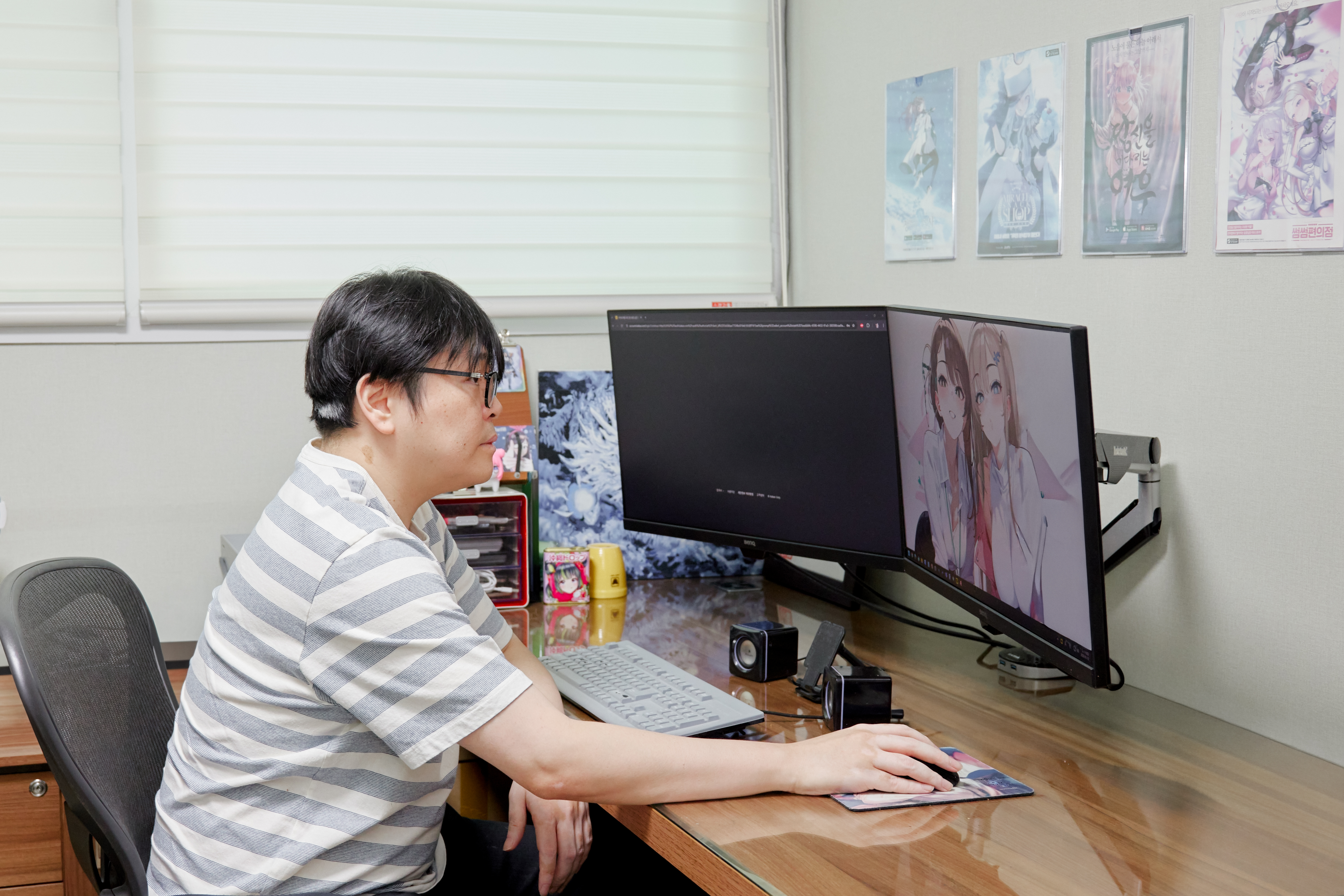
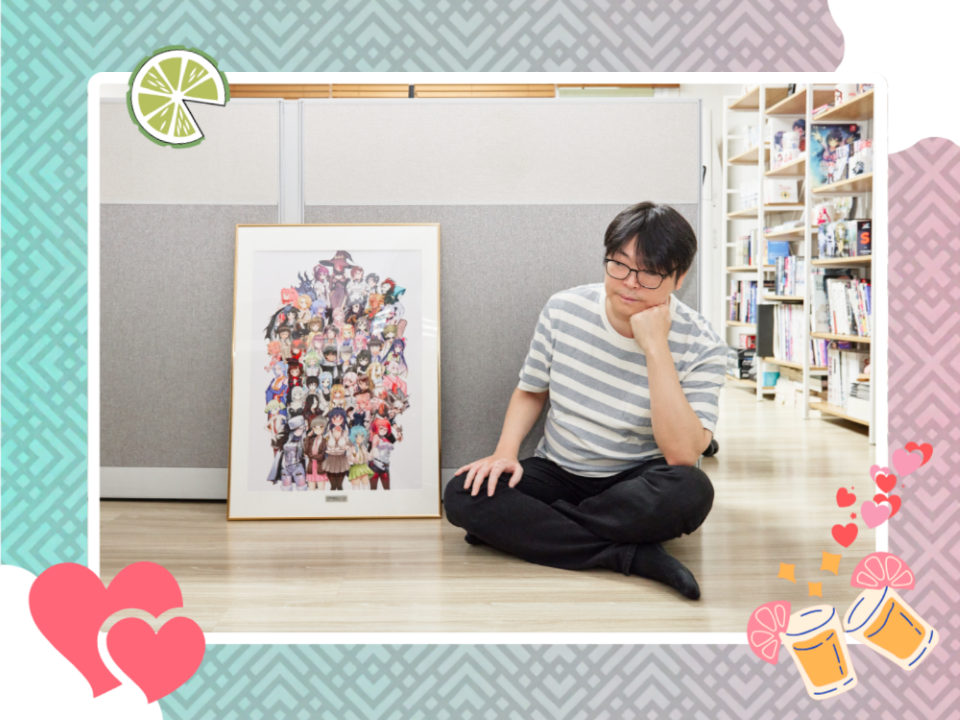
Han Jun, CEO of TalesShop: “Building with a Sub-Subculture Mindset” 2026-02-05
TalesShop is a name well known among fans of visual novels and anime-style dating sims. Having survived for over a decade, the developer has built a wealth of experience—from battling piracy in the early days of the mobile market to releasing the console version of My Girlfriend is a Mermaid and now expanding into global markets through the STOVE platform.
They have returned with their latest title, Mix Me Up Some Love!. The genre is a bold “modern martial arts anime-style dating sim.” It tells the story of a former martial artist who becomes a bartender in a modern world where warriors are no longer valued. The unique blend of martial arts and a bar setting defines the game. The illustrations are handled by Kero, known for previous TalesShop hits like Miracle Snack Shop, Some Some Convenience Store, and Random Chat. The scenario was written by a new writer named Noejo.
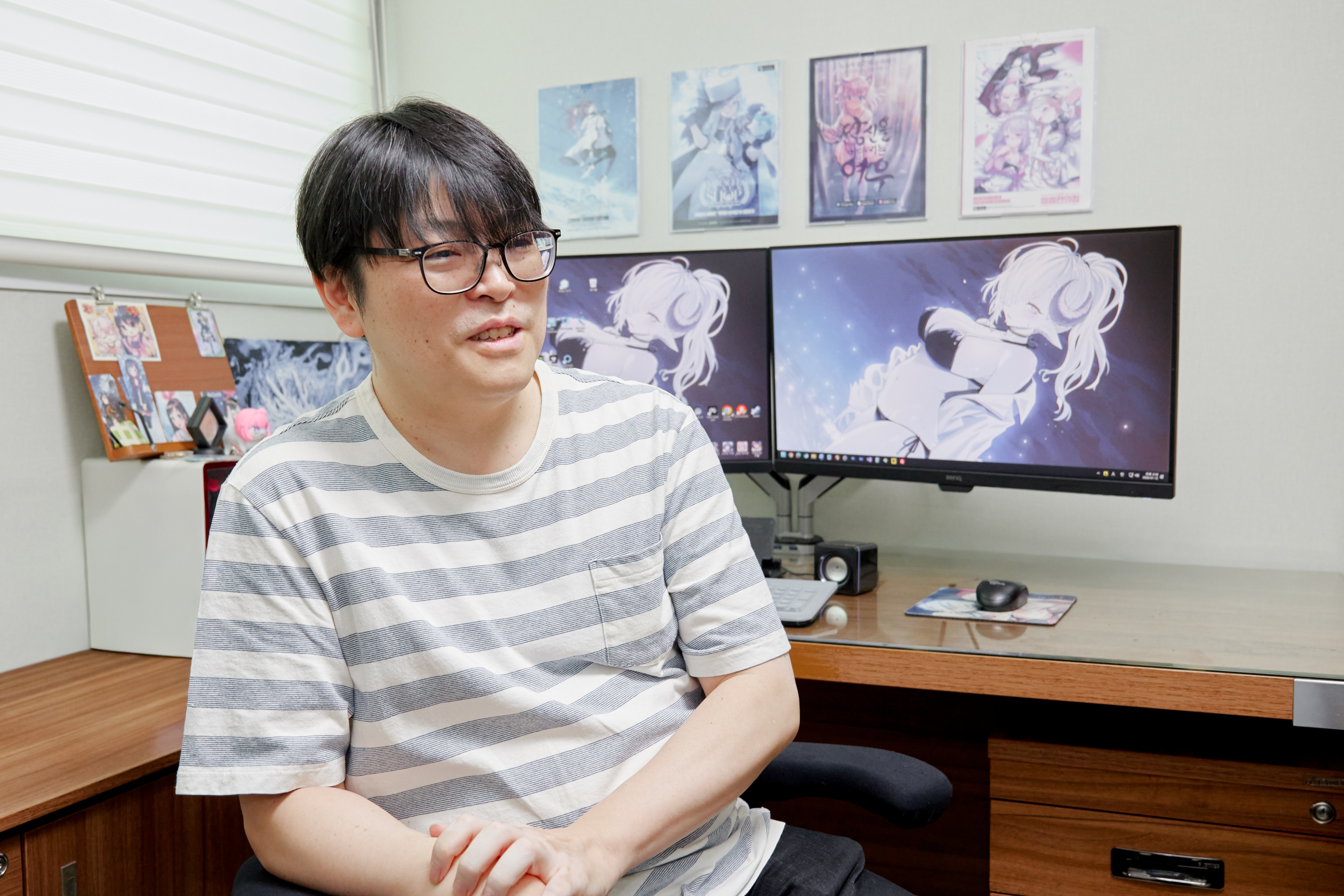
We spoke with CEO Han Jun about the new release and his plans for the year ahead.
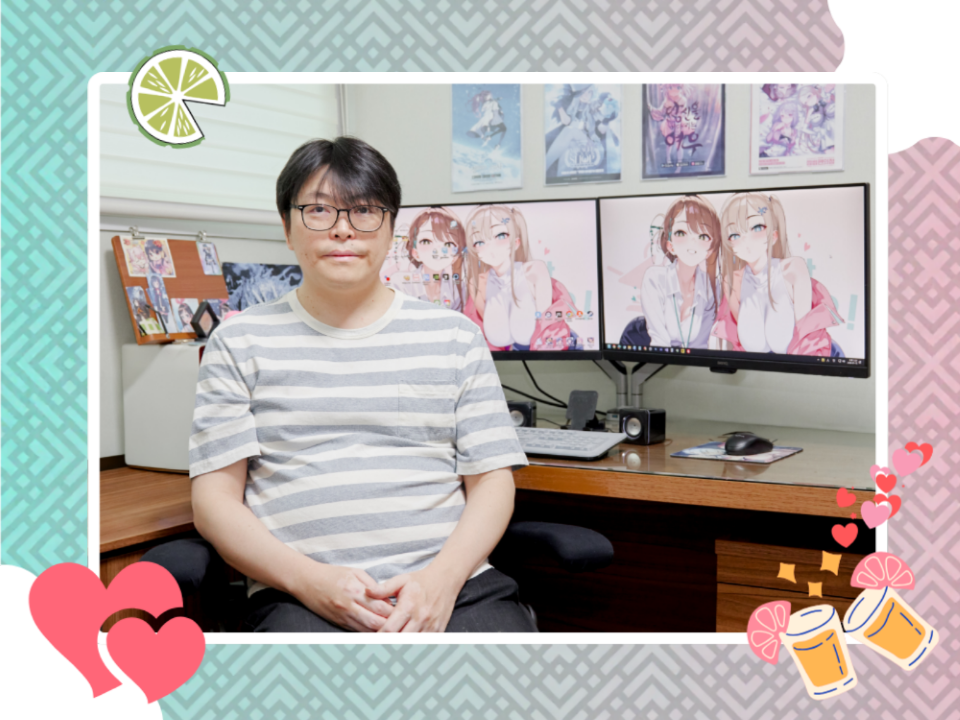
Could you introduce Please ‘Mix Me Up Some Love!’
It is a new dating sim developed and released by TalesShop. It follows a young man living in a world where martial arts still thrive as he works as a bartender and finds love. There are two main heroines.
We blended martial arts elements with a cocktail bar management mini-game. To be honest, our past mini-games didn’t receive the strongest feedback. Based on those experiences, we shortened the play sessions and designed them so they wouldn’t disrupt the flow of the story. I am confident that we’ve eliminated any sense of tediousness.
Admittedly, anime-style dating sims and martial arts aren’t a natural pairing. However, the PD and the writer were very determined. I trusted their vision and moved forward with it, and the result is a truly unique game.
What kind of romance does the game portray?
We focused on how adults meet and build relationships. That is why we set the protagonist as a working professional and the heroines as university students or office workers. We also contrasted the two heroines’ personalities to keep the story engaging.
Traditional romance in this genre often follows the “boy meets girl” formula—a classic storyline centered on youthful love. However, as the average age of our players has increased, we felt the need to create a new point of connection, so we made the characters working-age adults.
When you think of adults, you often think of university students or office workers. We considered where they might naturally meet, and the bar emerged as a shared social space.
Bars have a distinct atmosphere: people gather, and cocktails themselves are visually and creatively appealing, with unique names, designs, and colors. I felt it offered a rich sense of variety and an ideal setting for a more mature yet wholesome romantic space.
Are there any specific elements to get players' hearts fluttering?
We introduced new Spine animations. When Illustrator Kero’s art meets these production techniques, the characters’ emotions are conveyed much more effectively. I believe “seeing Kero’s art come to life” is the highlight. We also carefully structured the pacing of the romance—from its beginning to its development—focusing on adding greater emotional depth to each scene so players can naturally follow the emotional journey.
Aside from the two heroines, are there other romanceable characters? Some users are excited about the charming side characters.
We don’t have plans to add additional character routes at this time. However, we plan to introduce one more heroine through DLC later this year. We also have a comprehensive Season Pass planned, so please look forward to it.
In future DLC, we aim to explore more distinctive takes on adult romance. It’s too early to share details, but we are considering various archetypes, such as a deeply introverted heroine who rarely leaves her room or an otaku-type heroine.
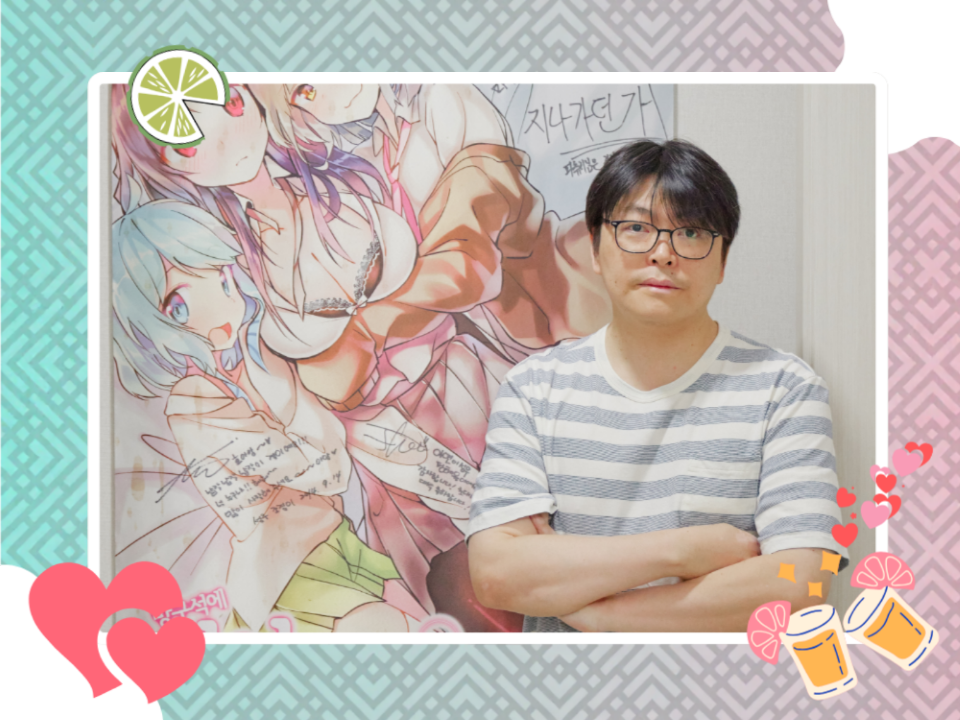
You are collaborating with Stove. How has this been helpful?
The market environment has changed. It’s becoming increasingly difficult to make games known to users. Back in 2014, when we released My Girlfriend is a Mermaid, there was a sense of a “frontier” spirit in the mobile market; people were eager to spend, and there was strong demand for paid games. By the time we released Miracle Snack Shop (2019) and Some Some Convenience Store (2020), the market had shifted, and the dating sim genre itself felt distinctive. Even then, the total number of games was smaller than it is now, so we could still get the word out.
Now, it’s different. It is hard to stand out amid the flood of new releases on Steam. Our competition isn’t limited to other games; we are also competing with OTT services and YouTube for people’s leisure time. We’ve reached a stage where it’s difficult to survive without active promotion. In this climate, the marketing and PR support from STOVE, which provides both ESD services and publishing, has become a practical lifeline.
The biggest reason we partnered with STOVE was to support global expansion. For last year’s release, Sani Yang’s Laboratory, we received significant support from STOVE in Chinese localization, launching, and showcasing the game at various exhibitions.
Have there been results from the global expansion?
After Sani Yang’s Laboratory launched on STOVE, we gained a growing fan base in China. We’ve received a great deal of feedback, including frequent questions about when the next DLC will be released. Although it’s still early, we’ve seen several encouraging signs that give us confidence about the future. We’ve been trying to expand globally for 10 years, but this time we’re seeing meaningful progress.
The biggest barrier to global expansion is translation. Because our games are story-driven, the volume of text is substantial. Maintaining consistency across translations is challenging, and finding a translator or team that aligns with our creative tone is both difficult and costly. However, with support from Smilegate, we were able to release Sani Yang’s Laboratory in English, Japanese, and Simplified and Traditional Chinese with relative ease.
You’ve been making story games for a long time. Why do you insist on this genre?
I started this company because I love stories. Personally, I deeply admire writers. I wanted to share the stories they create with as many people as possible. I make story-driven games because I believe they are the most effective medium for conveying a writer’s narrative. I don’t limit myself to any particular genre.
Personally, I love To Heart. It moved me deeply and made me realize that a game can deliver that kind of emotional impact. Other works that drew me into storytelling include the film Jurassic Park and anime such as Ah! My Goddess and Ranma 1/2.
I used to write as well. However, I realized I couldn’t match the truly talented novelists. That experience gave me a strong sense for good writing. I also tried drawing manga, but again, I felt I couldn’t compete with professionals. That gave me an eye for art. Since I can evaluate both writing and art, I create games guided by that perspective.
How can you express "originality" in the story game genre?
Ironically, originality is deeply connected to empathy. Originality without empathy is often dismissed as simply “weird.” Conversely, originality grounded in empathy can become a defining work for a generation. To truly resonate, that empathy must be strong and authentic. For example, K-Pop Demon Hunters felt original because it was rooted in empathy while pushing the idea just a step further.
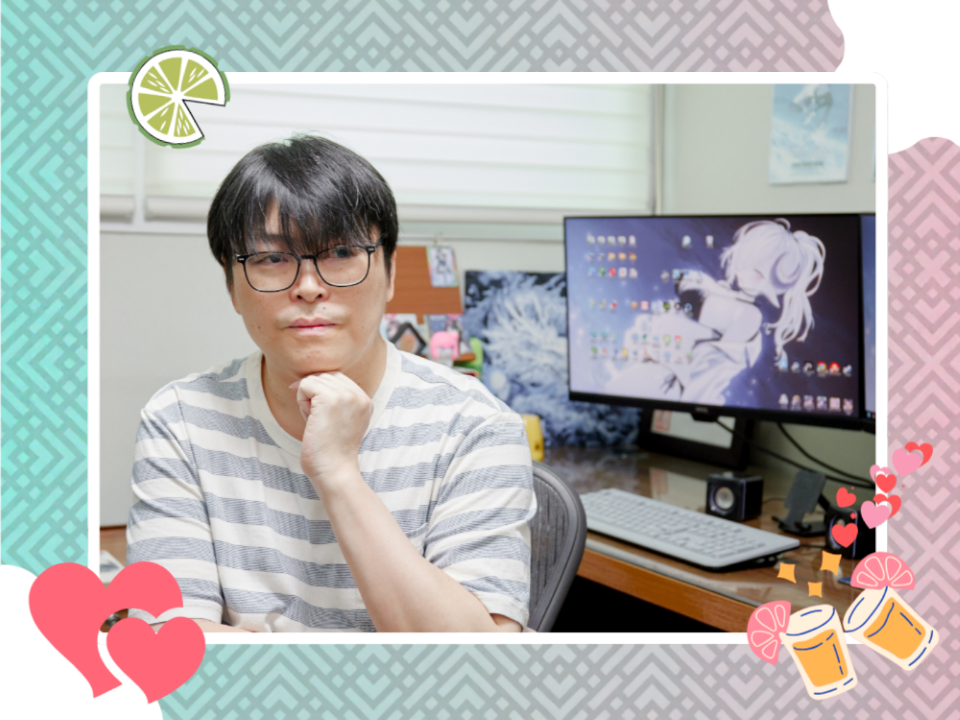
You survived another year thanks to the fans. What are your plans for 2026?
TalesShop intends to return to the original spirit of subculture and create unexpected, original games.
By “original spirit,” I mean a “sub-subculture” mindset. Today, the term “subculture” has become diluted. Large corporations now market their titles as subculture games. What was once a niche market has attracted major capital. The Japanese-style subculture that took shape in the 2000s and 2010s has, in Korea, reached a point where it can be considered part of the mainstream.
From our perspective, if we follow conventional subculture formulas, we end up competing directly with large companies. That is a battle we cannot win. Major players release expansive narratives for free, and some even produce full-scale animation to build their worlds. We cannot compete on that scale. The true spirit of subculture is about targeting the gaps within the mainstream. You cannot win by aiming for conventional subculture. You have to explore the niche within that space—that is what we call “sub-subculture.”
This year, I hope to introduce lighter, shorter games. We have secured several promising ideas and will take the time to develop them further to deliver even more engaging experiences. We appreciate your continued interest and support.
However, when quoting content in articles, please credit it as “Smilegate Newsroom.”


 TOP
TOP
