

Why a "burden-free" MMORPG, and how? Does it still capture MMORPG fun? — 'Eclipse: The Awakening' 2026-09-09
"If anything, I'd say it's actually closer to letting players enjoy the game fully."
That's how Producer Lee Sang-mun described the identity of 'Eclipse: The Awakening.' Developed by Ncity (Enpixel) and serviced domestically by Smilegate, the game is a PC/mobile cross-platform MMORPG built on Unreal Engine 5. It's set for official launch on the 10th of this month.
The game's central theme is "reducing burden." The core idea is to lower the anxiety of falling behind if you don't log in, the amount of time you have to pour in to grow your character, and the pressure of getting dragged into unwanted PvP fights. The concept is to let players enjoy the game intensively whenever they want to, on their own terms. On top of that, a cross-platform environment spanning PC and mobile adds greater accessibility.
I met with the development team behind 'Eclipse,' who are building a game designed to reduce burden so that players can have a full experience whenever they want to play.
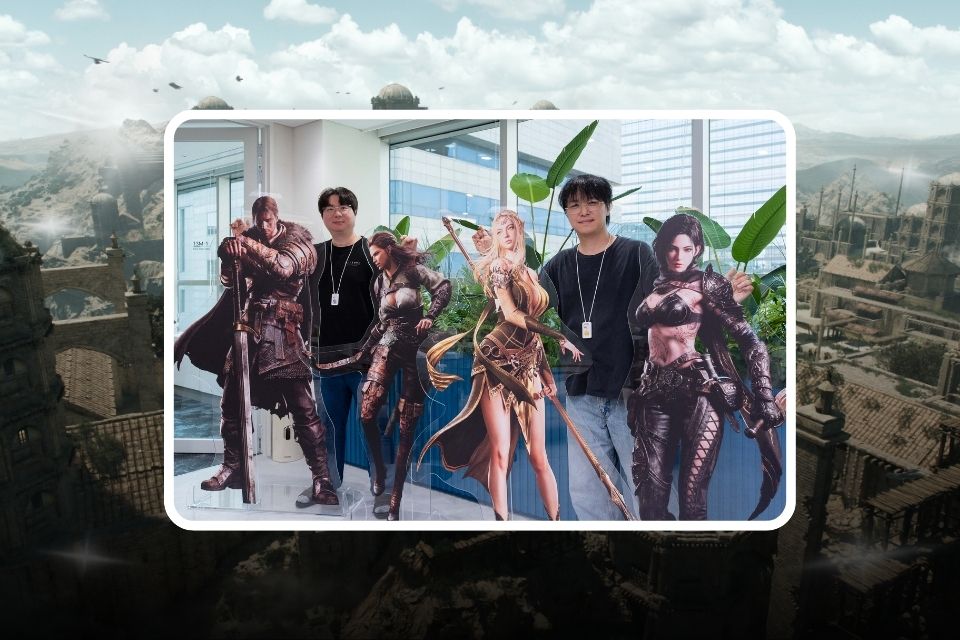
When I first heard the term "MMOLite," I wondered if it was something like a roguelite. As an old-school gamer, I couldn't quite wrap my head around the idea of an MMORPG with no burden. I always thought an MMORPG was supposed to be vast, deep, and packed with high-barrier content — that fully consuming it required setting aside a fair chunk of your real life. I'm curious what led you to envision a lower-burden MMORPG.
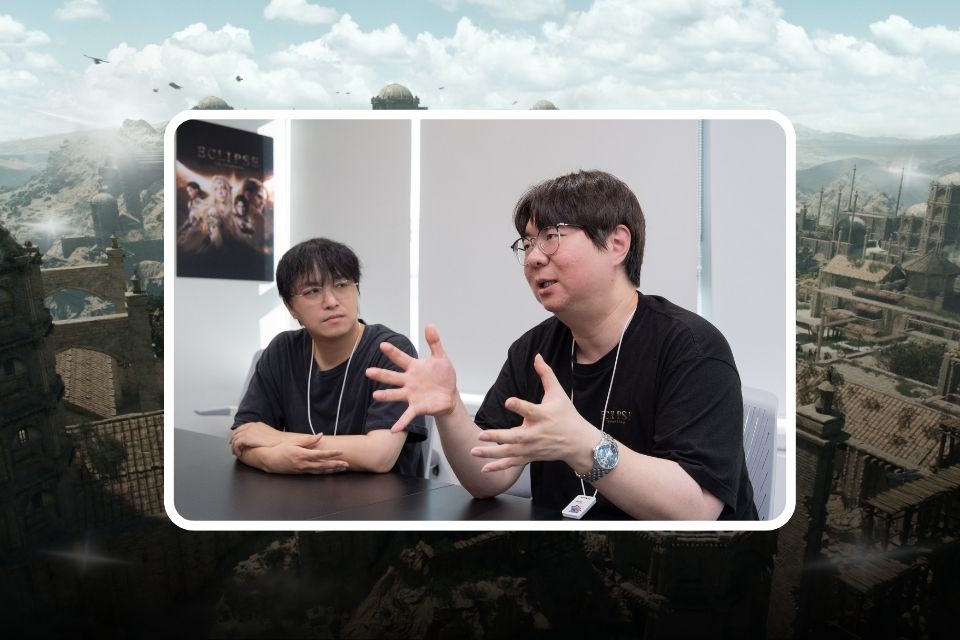
Producer Lee Sang-mun: These days, there's a shared sentiment among MMORPG players that the compulsion to log in and do something every single day has become a burden.
I think the feeling of falling behind in competition if you can't log in plays a big role. If you can't collect your resources every day, you inevitably start feeling like "I'm the only one falling behind." On top of that, if you set your character to auto-hunt and then get hit with an unexpected PK or griefing, the stress that causes is no small thing. You have to send your character back to the hunting ground and keep an eye on things, which takes a lot of hands-on effort. Beyond the frustration itself, there's also the sense of "loss" from being unable to do anything while you were down.
In this kind of situation, players are forced to choose between two options: spend more time, or spend more money. But lately, even that trade-off has gotten harder to make. Eventually, players arrive at the thought that "it's just not easy to keep playing an MMORPG," and they leave the game.
We felt that if this underlying structure wasn't fundamentally addressed, the barrier to entry for MMORPGs would only keep rising. So we set out to preserve the core fun of MMORPGs — growth, combat, and cooperation — while fundamentally reducing the burdens of login time, repetitive play, and competition fatigue. That's MMOLite.
I'm curious what convenience features Eclipse has introduced to reduce the burden on players.
Producer Lee Sang-mun: First, there's the "Sanctuary." It's a growth-support feature that automatically generates core growth resources over time. Resources needed for character development — summon tickets, experience points, growth materials, and so on — accumulate as time passes. If you're online, you can claim them instantly; if you were offline, you receive the accumulated rewards when you log back in.
The Sanctuary isn't just a simple reward storage system. By leveling up the "Constellation," you can simultaneously strengthen the "Sacred Relic" and the "Sacred Position." The Sacred Relic produces key growth resources, including summon tickets, while the Sacred Position supports core combat stats like attack power, defense, and accuracy.
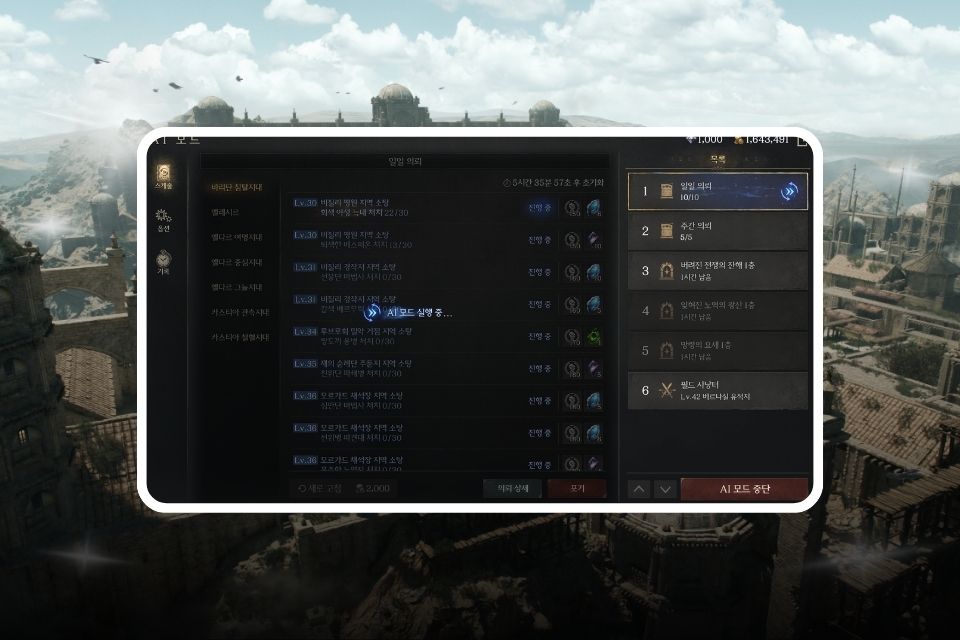
On top of that, we support 24-hour offline AI play. Even during times when players can't log in, they can set up a growth plan and then naturally pick up where they left off afterward. It's a device designed to relieve busy players of the pressure of "falling behind."
That's not all. There's also a differentiated system called "Eclipse Time." It's a farming-support feature that players can activate whenever they want, giving them a high chance of obtaining key growth items during field play.
Rather than requiring players to log in at a fixed time, it's structured so players can use it according to their own schedule and playstyle. This design aims to reduce the inconvenience of traditional MMORPGs, where players sometimes had to adjust their daily routines just to catch time-slot-based events. It's a way of boosting growth efficiency on the player's own chosen schedule, not one dictated by the game's timetable.
Doing PvP properly in an MMORPG comes with a heavy burden — often demanding a huge amount of time, effort, and even personal connections. Eclipse presumably had to lower that burden while still preserving the appeal of PvP. How did you approach solving that?
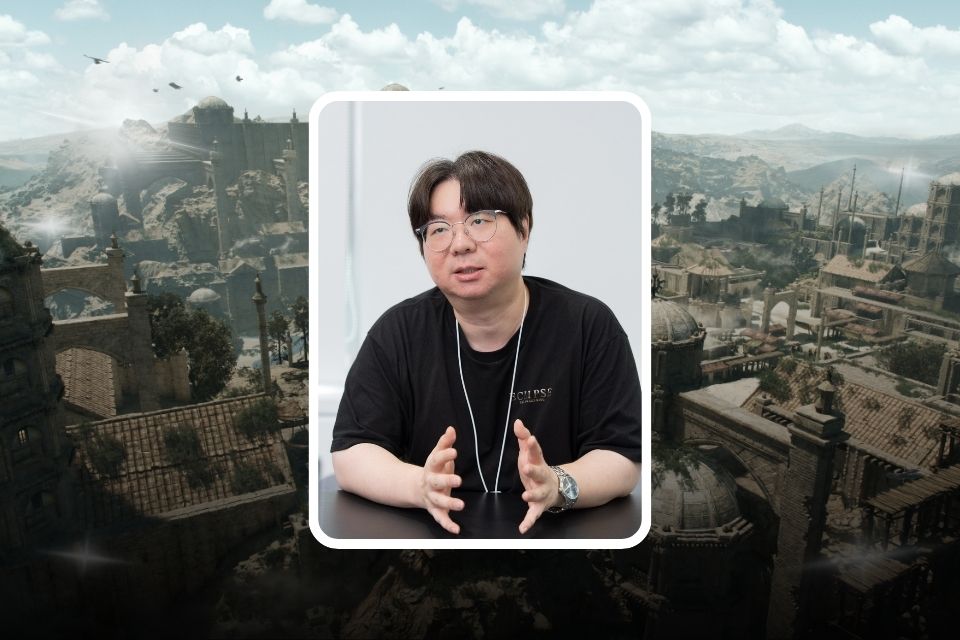
Producer Lee Sang-mun
Producer Lee Sang-mun: Personally, when I played other games, I used to throw myself really hard into PvP content. There was enjoyment in that, but also a lot of stress. Notifications kept coming in, phone calls kept coming in — it felt like it was giving me a nervous breakdown. Even if you try to take it lightly, there are still problems. Sometimes you have to do PvP you don't want to do, and sometimes you get stressed out by griefing.
The point is, stress is always there — whether you play hardcore or not, and whether or not you belong to a so-called "line" (guild/faction network).
That's why many games have tried separating PvP and PvE by zone. But that's not a fundamental solution — players can always just run across the border and escape. Whether you're the one being ganked or the one doing the ganking, encountering this kind of situation just leaves a bad feeling. It never became a real fix.
To prevent this, we designed the system so that conflict continues only where there's a legitimate reason for it. 'Eclipse' designates most areas as safe zones, reducing the burden of unwanted ganking. Players who want higher rewards and faster growth can choose to enter PvP zones, where they can enjoy risk and reward together. Rather than forcing competition on everyone, we made it a choice.
We've also opened up opportunities at the content level so players can enjoy PvP without pressure, such as in battlegrounds. The "Highriver Battlefield," a faction-versus-faction combat mode, offers a short, condensed combat experience. It's large-scale battle content you can jump into immediately after matching and finish in around 10 minutes. There's no death penalty and unlimited respawns, lowering the barrier to entry. It's designed to reduce long wait times and the burden of drawn-out battles while still preserving immersion.
To sum up, we made it so that people who love PvP can enjoy PvP, and people who love growth can enjoy growth. We designed it so you don't suffer a disadvantage because of something you chose not to do.
MMORPGs are games where people rub shoulders with other people. Back in the day, there was even a joke that chatting on the roof of the Orgrimmar bank in WoW was the real "endgame content" — MMORPGs functioned as a kind of society, often sharing a culture and identity. Won't this major pillar of the MMORPG experience get diluted by all these convenience features?
Producer Lee Sang-mun: I think that's an unavoidable trade-off to some extent. Players prioritize their real lives. Even if they want to play, there are limits on how much time they actually have available. And within that limited time, instead of being able to fully enjoy it, they end up rushing to finish their so-called "homework."
Traditional MMORPGs pitch deep growth systems, cooperation and competition, and a foundation that supports long-term play as their core strengths. But to make the most of these strengths, you need long play sessions, repetitive chores, and endless competition. It's a structure where you have to grind through before you even get to the fun part. And that grind itself has been functioning as a burden all along.
Rather than reducing depth, Eclipse lowers the burden of the process needed to reach the fun. We want to shorten the preparation time required just to be able to enjoy the game. The idea is to let players spend the time they've set aside for gaming on actual fun, rather than on chores or grinding.
That's why we want players to be able to fully enjoy the game whenever they choose to play. Our goal is to respect players' real lives while letting the game blend naturally into their lifestyle. If anything, I'd say it's actually closer to letting players enjoy the game fully.
From a more critical angle, some might argue that resolving the burden of playtime is really no different from old-school macro programs. What's your take on that?
Producer Lee Sang-mun: I'm aware that concern exists.
Everyone gaming today, myself included, has a busy real life. And yet none of us wants to miss out on growing the character we've grown attached to. I see these convenience features as a device to make up for that gap.
First of all, these are official features designed to let players continue their growth flow within boundaries set by the game itself, so there's a clear distinction from macros. On top of that, Eclipse's convenience features are a step beyond old-school macros — they're also more considerate of usability. Of course, using these burden-reducing features is entirely up to the player's choice. Since it gives individual players more options to choose from, I think it will be received positively.
We don't want to force players to be playing our game 24 hours a day. We'd like it to be a flexible game — one where players can enjoy other content, take care of their daily lives, and then come back in when there's an event or the timing feels right.
Reducing the burden of login time inevitably means less time spent actually looking at your character. There's even a saying among gamers — "I'll wear the same underwear for years, but I'll buy my character's underwear the moment it's new" — showing just how much affection players pour into their characters. Doesn't that mean Eclipse also faces the challenge of drawing players into that immersion in a shorter amount of time?
Producer Lee Sang-mun: There are ways to boost immersion through systems, and ways to boost it visually. First, 'Eclipse' features four classes: Fighter, Ranger, Sorceress, and Assassin. Each class can choose between two weapon types, allowing players to build different combat styles even within the same class.
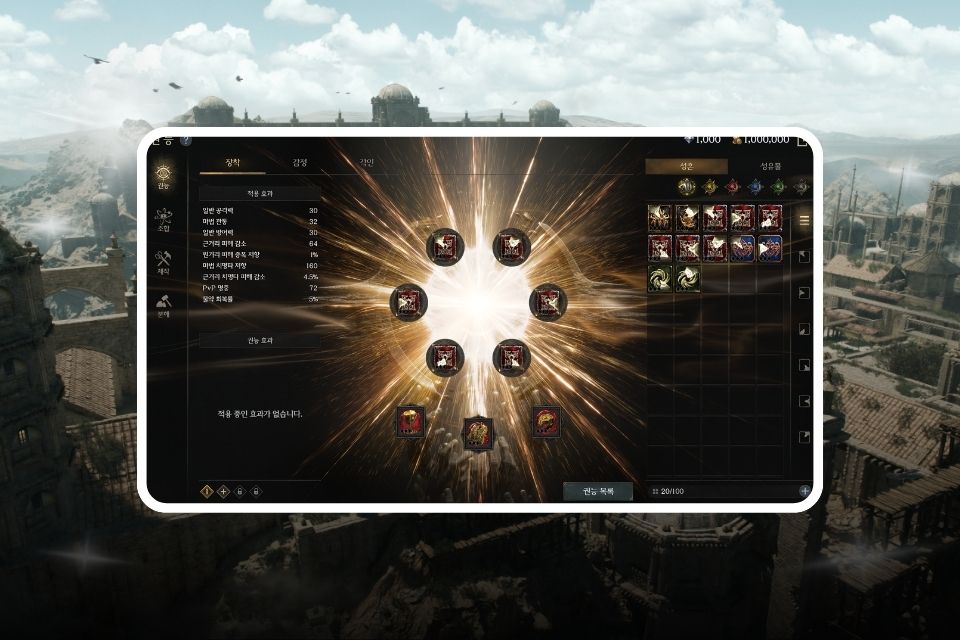
The core of combat growth is "Skill Fusion." Players can combine two skills to create a new effect. Even with the same class and weapon, the way you fight changes depending on which skills you fuse together. Rather than simply focusing on growth that raises combat power, the structure emphasizes the fun of figuring out your own unique build.
At a basic level, anyone can make combinations where the outcome is predictable, but by mixing things up in more varied ways, players can discover unexpected skill combos. You can use just one fusion skill, or up to a maximum of three. Depending on the situation, there's a large number of possible combinations.
The "Authority System" also expands combat strategy. By combining Authorities, players can obtain special Authority Skills that reinforce their combat style. Choices that begin with class and weapon carry through into Skill Fusion and Authority combinations, creating a diverse range of combat styles. This lets players grow more attached to and immersed in their character.
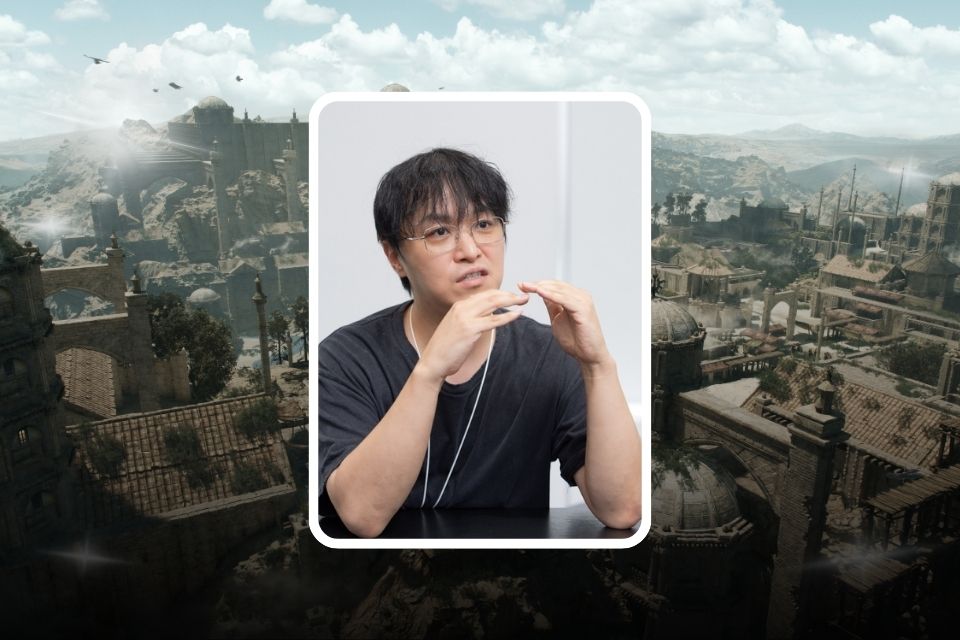
Art Director Kim Dong-hyuk
Art Director Kim Dong-hyuk: We also put effort into boosting immersion visually. Most games these days use a customizable avatar format. But we didn't go that route.
Instead, we provide forms unique to our worldview — the idea is that you're playing an original character that exists within that world. We wanted to create Eclipse's own 1% point of differentiation.
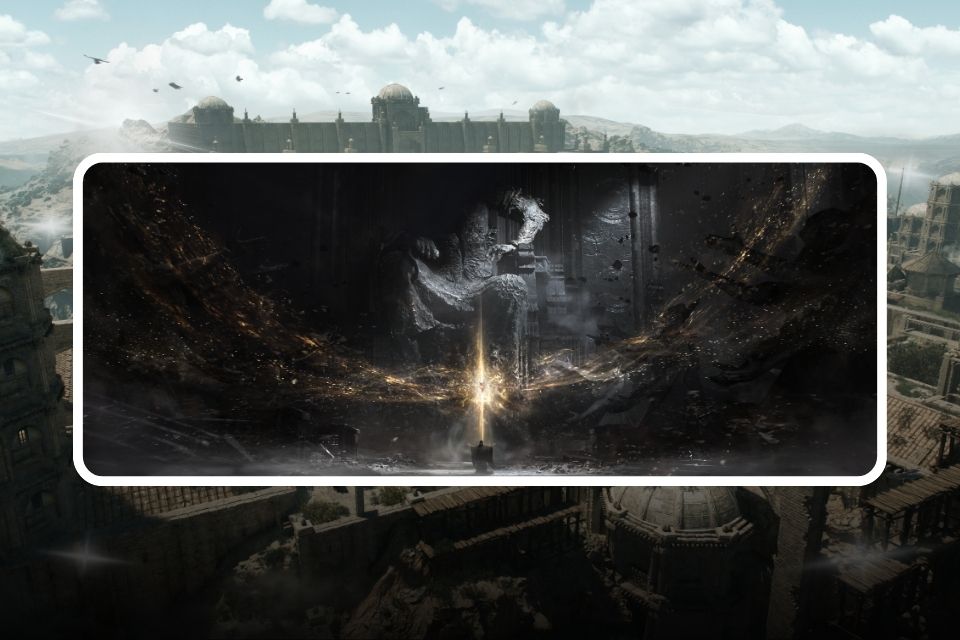
We set dark fantasy as our key focus. Since the world is built on an original mythology, we don't openly reveal what the gods actually are. Instead, we let players come to understand it through the way the world itself is presented.
For example, lower-tier forms look closer to human, while higher tiers take on shapes closer to the very first beings created by the gods. This is how we let players feel the worldview. It's a similar concept to a relic that's been left untouched for a long time, gradually reclaiming its original form.
To pull off this differentiation well, we did extensive research — ancient texts from various countries, artwork depicting imagined beings, and even the direction and staging used in commercials (CFs) and other kinds of content.
We paid close attention even to small details in direction. We wove together design, staging, and narrative. Every object and every motion that appears was designed to fit the world. Personally, I really love the feeling of parts interlocking and coming together, so I put a lot of that sensation into the direction.
We tried to secure immersion by letting players genuinely feel Eclipse's world as it is.
Among cross-platform games, it's fairly common to see major graphical gaps caused by the difference in specs between PC and mobile. How did Eclipse solve this problem?
Art Director Kim Dong-hyuk: For cross-platform, key design and concept for expressing the world matter more than raw engine technology.
Good performance alone doesn't make a good game. There are cases where lowering the settings makes the identity of the game disappear entirely. We made sure to use the performance the engine provides precisely where it's needed. And we worked to ensure that the design condensing the identity of the world could still come through at any spec level.
That way, even with settings turned down, players can still feel the same atmosphere and concept.
However, when quoting content in articles, please credit it as “Smilegate Newsroom.”




 TOP
TOP
