

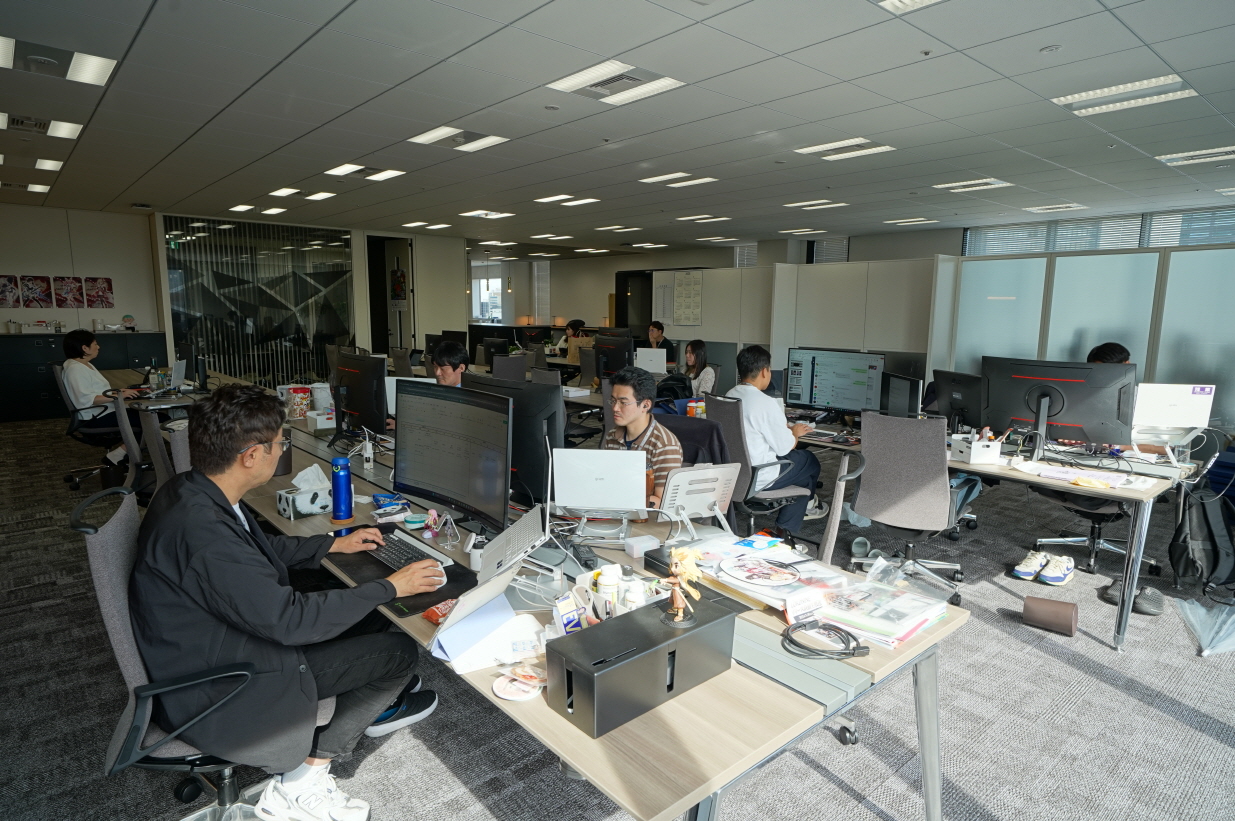
"Smilegate Japan: A Strategic Bridgehead for Global Business Expansion" 2025-12-22
Japan represents the third-largest game market in the global industry.
Experts anticipate the Japanese market to grow to approximately $60 billion by 2033. It is also home to world-class gaming companies such as Nintendo and Sony Interactive Entertainment (SIE).
To penetrate this “Gaming Kingdom,” Smilegate has established a local subsidiary in Japan. The Japan office is positioned to define local business strategies while serving as a strategic bridgehead for expanding Smilegate’s global services. The Smilegate Newsroom visited the Japan office and spoke with Won-kyu Lee, Director of Japan Business Development, and Kyu-ha Lee, Head of Japan Business Strategy Planning, to discuss current operations and future plans.
Q. What was the background behind establishing Smilegate's Japan office?
The Japanese game market is the third largest in the world and a core market that must be addressed for global expansion. Given the cultural and industrial similarities between Korea and Japan, we view the two markets as a single region and see value in gradually expanding our presence across both. This approach was designed to strengthen our influence not only in China but across the global business landscape as well. Based on this need, we opened the Tokyo office in October 2024 and began full-scale operations in January 2025.

Q. How would you describe the Japan office in one word?
I would describe it as a “special task force” dedicated to driving business in Japan. Unexpected variables and sudden challenges frequently arise when operating in the Japanese market. Our role is to respond quickly and coordinate effectively so that business initiatives remain on track. With a deep understanding of the local game industry, the Japan office functions as an elite, specialized unit within Smilegate.
Q. Japan holds a significant position in the global market. What are some unique characteristics or recent trends you are noticing?
This is a question we receive often. Rather than focusing solely on quantitative indicators, understanding Japan’s cultural characteristics provides more meaningful insight.
First is the concept of “Oshi” (推し) culture. Rather than prioritizing competition or efficiency alone, players develop strong emotional attachments to specific characters or games. This sentiment plays a major role in shaping consumption behavior and preferences among Japanese gamers.
Second is a strong narrative-driven preference. Japanese players place great value on immersion and emotional engagement, often seeking experiences that make them feel as though they are part of the game world.
Third is a culture of emotional sharing. While daily communication may appear reserved, once emotions are triggered, players actively share moments of excitement, frustration, or key events through social media, allowing reactions to spread rapidly.
From a market perspective, mobile games continue to maintain a solid share. However, since the COVID-19 pandemic, the PC platform has shown clear growth. Japanese developers are also increasingly looking beyond the domestic market, actively exploring opportunities on global platforms such as Steam. At the same time, overseas companies—particularly those from China—are entering Japan aggressively with high-quality titles backed by a strong understanding of Japanese culture.
Q. What are the primary roles currently held by the Japan office?
The Japan office works closely with internal teams from the early planning and development stages of new titles, offering strategic guidance based on insights gained from the local market. Another key responsibility is analyzing Japan’s advertising and marketing landscape to design and execute campaigns optimized for local conditions. In addition, the office actively pursues new collaborations with well-known Japanese IP holders and explores opportunities for joint game development.
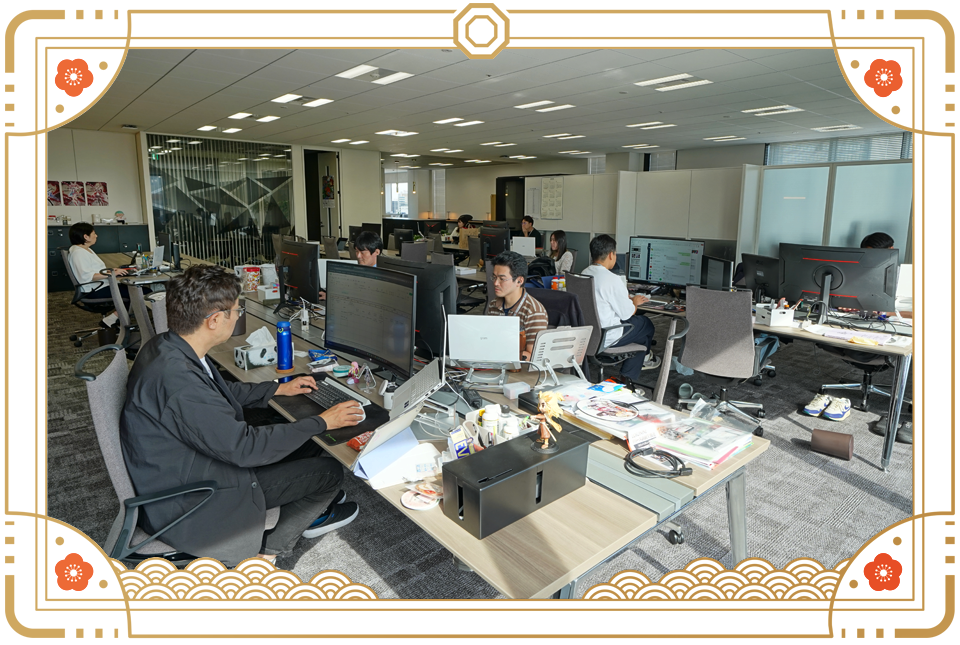
Q. How does the Japan office collaborate with Smilegate’s headquarters in Korea?
We communicate and collaborate actively. We visit the HQ once a month to communicate directly with business units, and we frequently exchange opinions via video calls and messaging. Recently, more personnel from the HQ have been visiting Japan to discuss various agendas or to manage offline events.
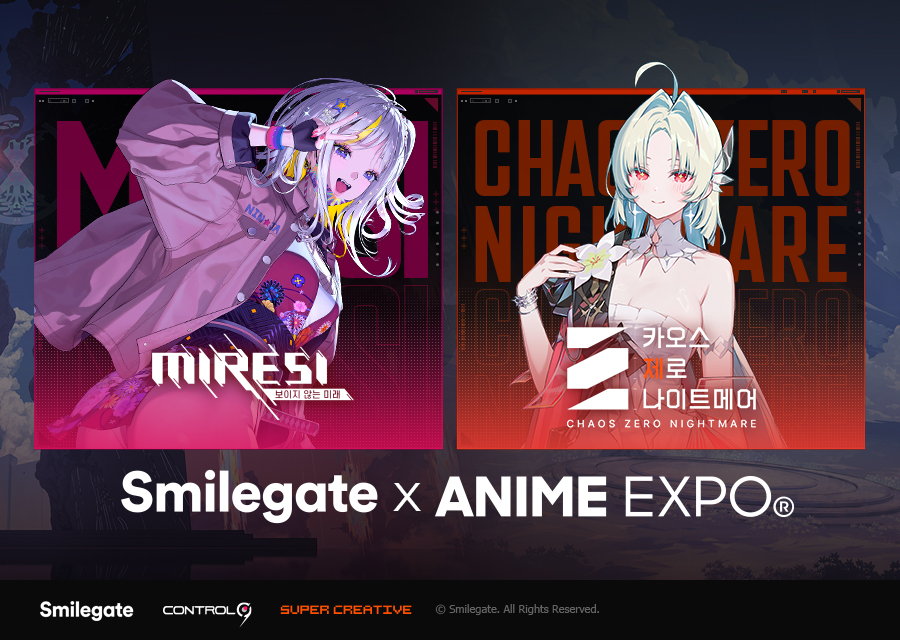
Q. You participated in Tokyo Game Show 2025 (TGS) last September and showcased titles such as Chaos Zero Nightmare and MIRESI: Invisible Future. What was the intent behind revealing these games in Japan?
At the time Chaos Zero Nightmare’s launch schedule was finalized, awareness and branding for both the Smilegate Group and the project itself were still limited in Japan. Participating in TGS was necessary to raise local awareness and strengthen branding. In the case of MIRESI, the focus was on establishing a long-term foundation for brand positioning. TGS served as an ideal opportunity to achieve both objectives.
Q. How did Japanese users respond on-site?
For Chaos Zero Nightmare, the goal was to deliver a gameplay experience that faithfully conveyed the game’s world and content while sustaining anticipation leading up to launch. Throughout TGS, the demo zone remained consistently crowded, and users displayed a high level of immersion. It was particularly notable how carefully players engaged with tutorials, character details, and card descriptions. Internally, the outcome is viewed as highly successful.
For MIRESI, we used an LED tower to draw attention and designed the experience to encourage emotional connection with the characters through the demo and ending. This approach proved effective, allowing the title to stand out at TGS despite being newly introduced. The LED tower footage went viral on X (formerly Twitter), recording more than 2–3 million views, generating strong interest not only from users but also from local media and marketing agencies.
Q. What does this participation in the game show mean for the future strategy of the Japan office?
TGS marked a turning point in establishing Smilegate’s presence and visibility in Japan. It created a foundation for both the Smilegate Group and its new titles to build and strengthen a clear brand identity in the Japanese market. Future business strategies will be developed on the basis of this momentum.
Q. What are the key goals or growth strategies for the Japan office moving forward?
Through titles such as MIRESI, we aim to establish the perception that Smilegate delivers unique gameplay experiences alongside high-quality service. By achieving meaningful milestones in the Japanese market, the Japan office also seeks to contribute to the continued growth of the STOVE platform.

However, when quoting content in articles, please credit it as “Smilegate Newsroom.”







 TOP
TOP
